
School dropout in adolescence

Mireia Navarro Vera
Director and psychologist
COPC 10631
Contents
- What can we do to prevent it?
- Differences between academic failure and school dropout
- What learning difficulties or disorders can we find?
- What to do when we identify one of these situations?
- A high level of demand from the educational center, far higher than the student's academic performance.
- Family intervention and involvement.
- Coordination between family and educational center.
What can we do to prevent it?
There are various situations that can alter the psycho-emotional health of our adolescents. They may come to believe they are less capable of facing the various challenges, both academic and personal, that they will encounter along the path of adolescence.
These frustrating, hopeless situations, loaded with a high level of stress and anxiety, can give rise, in some cases, to academic failure and/or school dropout.
According to Idescat (Statistical Institute of Catalonia), the school dropout rate in Catalonia in 2020 stands at around 17.4% (Idescat).
This figure exceeds the maximum set by the EU, which requires member states to keep their early school dropout rate no higher than 10%. (INE)
Differences between academic failure and school dropout
We speak of academic failure in those cases in which students do not complete Compulsory Secondary Education. In contrast, we understand school dropout to mean those cases in which, having obtained the ESO graduate certificate, they do not continue their education.
The concept of "failure" has been called into question for years due to its negative connotation. It carries a burden of negative attribution toward the person and assumes that all the factors related to this phenomenon depend exclusively on them.
There are various elements capable of causing young people to close their books for good. One of the most common factors is learning disorders or difficulties not detected in time.
When we have to face a learning difficulty or disorder, one of our main objectives is to provide a stable and secure learning process through accompaniment, support, and curricular adaptations. All of this is carried out to minimize the negative effects of these difficulties and to preserve, as well as reinforce, their self-esteem, security, and self-concept, aspects mainly involved in their development, both academic and personal.
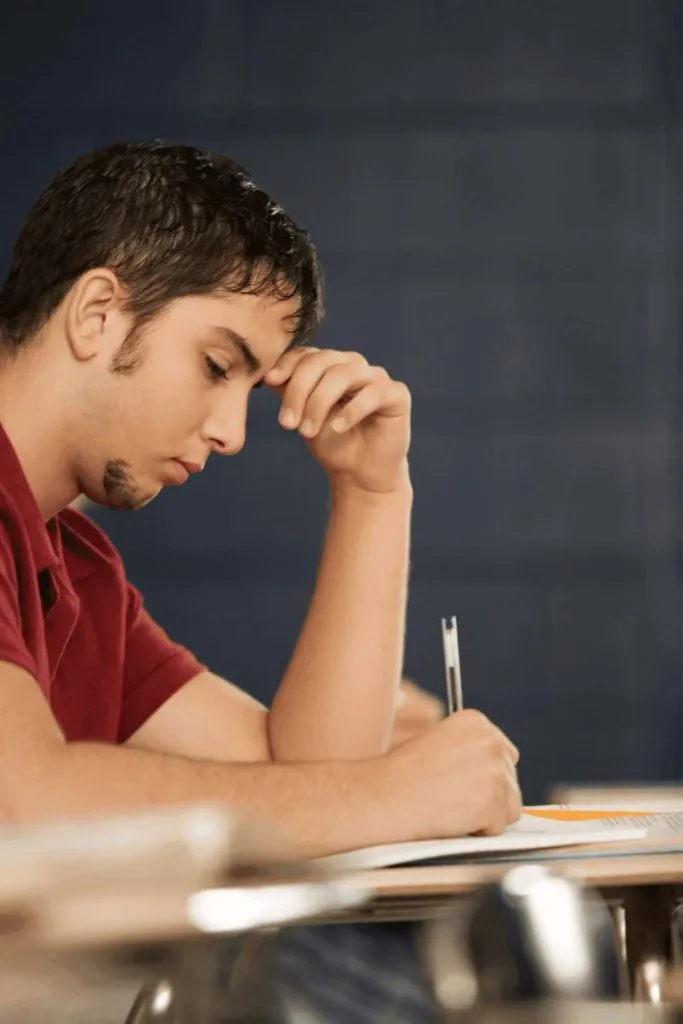
As has been mentioned in previous blog entries, an early detection of these difficulties is very important, since we have a specific period in which neuronal plasticity works in our favor to re-educate them and obtain more satisfactory results. After this period, from approximately twelve years of age, we must intervene with compensatory strategies.
The transition from Primary School to ESO is a complicated stage in many cases, full of changes and adaptations. In this new period, the need to manage different emotions typical of adolescence may emerge, as well as new educational needs that may not have been previously identified and, consequently, have not been addressed through psychopedagogical re-education. We would be in a situation in which the educational process is altered and does not progress as expected according to the person's normative group; therefore, it would be necessary to intervene as soon as possible with specific help to resolve it.
What learning difficulties or disorders can we find?
In this stage it is very common to encounter difficulties related to planning, organization, and time management. These are cases in which they need to learn to keep their work materials in order, do not have the tools to organize the school agenda in an adequate and practical way, and need help to learn to distribute their time once they leave the classroom to do homework and prepare for exams. Very often we find attention disorders or alterations associated with these difficulties, since they affect the executive functions mainly involved in learning processes.
Other frequent difficulties we encounter in psychopedagogical re-educations are the difficulties or specific learning disorders of reading and writing, such as Dyslexia, or of mathematics, Dyscalculia.

Some signs that can help us detect when our sons and daughters need help:
- Low motivation and self-esteem.
- Negative, sudden, or progressive changes in academic performance. No improvements are seen year after year, or grades suddenly begin to drop, or subjects are not passed.
- Poor planning and organization for both homework and exam preparation. They forget to hand in assignments, study with little advance notice, always seem to need more time, etc.
- Mood changes, presence of anxiety and/or stress. Irritability, isolation, constant worry, general lack of interest, alteration of sleep and rest hours, blocks, etc.
- Low performance not in line with the degree of effort and involvement. They dedicate many hours and the results are low, or they do not meet the established objectives.
- Difficulties related to reading comprehension or writing. Lower grades in subjects involving comprehension or written expression, for example, mathematics or languages. Difficulty understanding statements or texts, lack of vocabulary, poor planning and structuring of ideas when writing, numerous spelling mistakes, etc.
What to do when we identify one of these situations?
The recommended approach is, first, to contact the educational center to learn their impressions and, second, to go to a specialized psychology center where they assess and give an explanation for the difficulties or alterations that have arisen, so as to be able to design an intervention focused on them.
Beyond the learning difficulties we have explained, there are other factors that can put our adolescents' educational future at risk; some of these are:
A high level of demand from the educational center, far higher than the student's academic performance.
This is very important and is not always taken into account from the outset. Each school or institute, despite following a common guideline established by the Departament d'Ensenyament, has different methodological characteristics that make them unique.
On many occasions the educational center is characterized by having a high level of demand both in its methodology and in the academic results of the students. If performance is not in line with these methods, an imbalance is produced that is very difficult to compensate for, despite the curricular adaptations and external support offered to the student.
In these cases it is advisable to assess the characteristics of the student and those of the center for a possible change, with the aim of offering educational help adjusted to their needs that provides stability and security in order to reinforce their self-esteem and self-concept.
Family intervention and involvement.
To control these factors it is essential to provide, both to families and to teachers, psychoeducation so that they know what to observe and how to detect these significant changes in students, and in this way be able to intervene as soon as possible.
The family environment, whether positive or negative, influences our sons and daughters; for this reason, if we find ourselves in a tense, distant, or unstructured environment, it will have a negative impact on our adolescents, not only at an educational level but also an emotional one. Going to a professional will help to acquire strategies for an adequate management of their emotions and, at the same time, to improve the family dynamic, having a positive impact on all its members. In addition, we will provide the adolescent with a personal and unique space in which they can talk about all those aspects that worry them or cause them discomfort.
Coordination between family and educational center.
Communication is the basis for everyone to be aware of all those relevant aspects of the students, both academic and emotional and motivational. Once learning difficulties, low self-esteem, lack of motivation, poor stress management, or high anxiety levels are detected, it is advisable to contact the institute, and vice versa, to share impressions, and once the problem is known, to be able to go to a professional so they can guide us and provide us with the guidelines to follow in each case.

There are numerous factors that can interfere with and influence our sons' and daughters' educational journey. Of course we are not always exposed to school dropout, but it is important that, once some of the difficulties we have mentioned appear, intervention takes place as soon as possible to provide the student with the necessary help so as not to compromise their educational process.
With patience, affection, and accompaniment, the barriers they may encounter on their path can be overcome; it will be one more lesson among the many they have yet to live through.
Does this resonate with you?
Our team can help. Write to us and we'll guide you with no obligation.