
What is ADHD and learning disorders (I)

Mireia Navarro Vera
Director and psychologist
COPC 10631
Contents
What is ADHD?
ADHD is a disorder of neurobiological origin characterized by symptoms of inattention, impulsivity and/or hyperactivity.
How to detect ADHD?
Some characteristics:
- Inattentive predominance: paying attention to any stimulus that interrupts the activity, seeming not to pay attention while we are talking to them, showing a performance below what is expected for their age and planning and organization difficulties.
- Impulsive-hyperactive predominance: interrupting conversations or activities, responding and/or acting without thinking too much, difficulty carrying out quiet tasks or games and disruptive behavior inside and outside the classroom, among others.
Approximately 20% of ADHD diagnoses present alongside a learning disorder. (Albesa, Gorostidi, y Beregaña, 2014). If there are suspicions, the most appropriate thing to do is to see a professional to carry out a thorough evaluation of each case and be able to obtain answers to those difficulties.
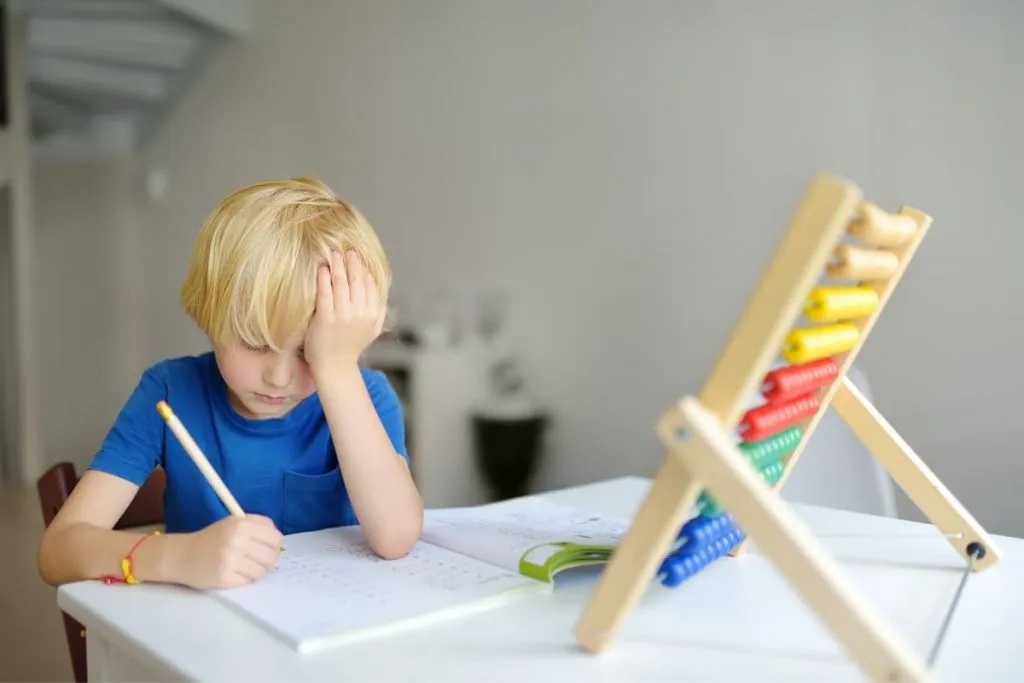
Children diagnosed with ADHD and some learning disorder may present difficulties in reading and writing as well as in calculation and mathematics. In these cases it is essential to design a curricular adaptation not only to adapt the acquisition of learning to the difficulties they present but also to cushion, in most cases, the low self-esteem and the demotivation.
Learning disorders
The main learning disorders that arise are:
- Reading difficulties. The reading process is altered and falls below the level expected for age. These alterations respond to a difficulty in decoding phoneme-grapheme (sound-letter) which leads to the omission and addition of letters, as well as low accuracy, fluency and reading speed and consequently, poor comprehension.
- Writing difficulties. Alterations in written expression, they make many spelling mistakes and present difficulties in creating sentences or texts. There may also be evidence of alteration in temporal reasoning and in the planning and structuring of the ideas to be written. Inattention and impulsivity can lead to poor handwriting due to the difficulty in controlling certain fine motor movements.
- Mathematics difficulties. It entails difficulties in understanding mathematical problems (they do not know which operation to perform to solve it) as well as in calculation due to the deficit in numerical awareness.
- Automatic verbal sequences. This difficulty becomes present when students must make a great extra effort, on many occasions without results, to memorize and manage to automate the multiplication tables.

Intervening early in these cases with psychopedagogical re-education in the Primary Education stage will allow the child to develop strategies and tools to cope with their difficulties. A diagnosis is not necessary to re-educate learning or attention difficulties, in fact it is a preventive intervention aimed at helping and accompanying them at each educational stage when learning problems arise. Otherwise, if that support does not arrive at the right time we will have working against us the decrease in neuronal plasticity which begins to occur from Secondary Education onwards. In this case these difficulties will be worked on through compensatory strategies. (Zúñiga y Forteza, 2014)
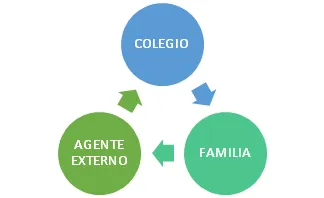
This argument explains the great importance of the triangulation between school, family and the external agents (speech therapists, psychologists, pedagogues, etc.). The purpose is to be able to detect as soon as possible any type of difficulty that entails a delay in the learning of children, an impact on their self-esteem and a demotivation that may trigger in the coming years into school dropout or failure.
References
Albesa, S. A., Gorostidi, A. M., & Beregaña, M. B. (2014). Trastornos de aprendizaje y TDAH. Diagnóstico y tratamiento. PediatríaIntegral, 655.
Zúñiga, A. H., & Forteza, O. D. (2014). El TDAH y su comorbilidad. Pediatría Integral, 18(9), 643-654.
ADHD and learning disorders at home
One of the biggest problems present in students with ADHD and some learning disorder arises outside the classroom, at the dreaded homework time.
First of all, it is important to accept that the behaviors carried out by our son or daughter are not intentional, that is, they do not maintain all the attention we would like not because they do not want to, but because they cannot. They do not get up every minute to annoy us, but because it takes a great effort for them not to move for a long time. They do not forget their homework or their agenda at school because they are a mess, but because they do not have the same capacity for organization and planning as the others.
For this reason and for many others it is necessary to adapt the learning process and establish clear and specific routines to carry them out in a consistent manner.
Here we present some keys to avoid conflict situations at home:
- Reinforce positively. We may tend, unconsciously, to focus more on negative behaviors than on positive ones. We must choose the behaviors that we consider most important and that we want to introduce into the routine we establish at home.
The main idea is to focus on the negative behaviors that we consider most relevant and we will pay more attention to the positive ones in order to reinforce them positively and immediately with the aim of strengthening their self-esteem.
Imagine that you spend the day receiving negative messages and punishments for actions you carry out involuntarily or uncontrollably.
>
It can be something frustrating and disappointing, what do you think?
- Behavior independent from the person. Understanding both ADHD and learning disorders entails comprehending that many behaviors are independent of the child. We will always make a constructive criticism directed at the behavior, never at the person.
Changing "Repeat the exercise and pay more attention" to "Let's repeat the exercise and we will try to find the error" or avoiding comments like "If you tried harder you would pass" or "Why can't you stay still like a normal child?" can greatly relieve this type of student.

- Routines and planning. It is essential to establish a routine starting from clear and appropriate rules and limits for each case. We must explain to them what it is about so that the children are aware that if they do not comply there will be a consequence.
It is very useful to create together a calendar or a list of instructions, always adapted to the needs and characteristics of the children, and place it in a visible area. It will not only help us to anticipate, organize and plan the tasks or activities but we will also be stimulating and developing their autonomy and self-esteem.
Routines structure the daily life of all children and provide them with security.
Example of a list of instructions for when we arrive home from school.
- Have a snack
- Empty the backpack
- Check the agenda. Do I have homework or exams?
- Do the homework
- Look at the schedule and prepare the backpack
- Appropriate times. We can help them choose the best time to work, in this way we will involve them in decision-making. One of the main factors that influence sustained attention is the motivation generated by the task to be performed, for this reason it is preferable to delimit several short periods of time combined with small breaks.
In this case the theory of less is more prevails to avoid frustration and demotivation.

If we suspect that our children are overwhelmed by the amount of homework it is advisable to discuss it with their teacher to assess a solution.
- Work area. There must be a specific study area, quiet and without distractions. Once again organization will be our best ally, it is very useful that they only have at hand the material they are going to need at that moment.
- Self-instructions. It consists of listing some steps to follow to carry out tasks autonomously following a specific order.
Some of these steps may be underlining the statements and marking the key word of it (for example, write, underline, cross out, join, etc.) or listing the steps to follow to solve a mathematical problem.
- Family, school and external support. This triangulation is essential in any special educational need case.
It is a multidisciplinary intervention in which the communication between the three settings is paramount to adjust the educational support to the difficulties and needs that the students present.
Sharing the perceived difficulties allows new measures to be incorporated to solve them.
The educational life of students with this type of difficulty can be frustrating and demotivating both for them and for their families, for this reason it is very important to help them from patience and unconditional affection. By adapting the routines, the educational supports and providing psychopedagogical help we can achieve positive results that will lead to improvements both in their academic performance and in their self-esteem and self-concept.
References
Albesa, S. A., Gorostidi, A. M., y Beregaña, M. B. (2014). Trastornos de aprendizaje y TDAH. Diagnóstico y tratamiento. PediatríaIntegral, 655. Atienza, J. D. (2006). COMORBILIDAD EN EL TDAH ADHD AND COMORBIDITY. Revista de Psiquiatría y Psicología del niño y del adolescente, 6(1), 44-55. Korzeniowsk, C., y Ison, M. S. (2008). Estrategias psicoeducativas para padres y docentes de niños con TDAH. Revista Argentina de Clínica Psicológica, 17(1), 65-71. Redondo, J. J. F., SÁNCHEZ, M. D. C., MARTINEZ, M. P., y de Miguelsanz, M. M. (2011). TDAH. Programa de intervención educativa. International Journal of Developmental and Educational Psychology, 1(1), 621-628. Sans, A., Boix, C., Colomé, R., López-Sala, A., y Sanguinetti, A. (2012). Trastornos del aprendizaje. Pediatr Integral, 16(9), 691-9. Zúñiga, A. H., y Forteza, O. D. (2014). El TDAH y su comorbilidad. Pediatría Integral, 18(9), 643-654.
Does this resonate with you?
Our team can help. Write to us and we'll guide you with no obligation.