“8 tools to combat childhood stress”

Eugenia Olego Gual
Child, adolescent, and adult psychologist
COPC 16511
Contents
”For every minute you are stressed, you lose 60 seconds of happiness”
What is childhood stress?
Stress is a word that has been quite widely used in recent decades and defined as something negative in our lives. But in reality we cannot live without stress, since without it we would not react to danger.
Let's imagine that we are in the middle of the Amazon and suddenly we come across a jaguar. What begins to happen inside us? We begin to activate our body, providing it with activity and energy, speeding up the heart, tensing the muscles, and breathing becomes faster. After the stressor has disappeared, the body begins to return to normal. This response helps us survive, which confirms that stress is good.
So, why do we use stress as something that is not positive? When this stress reaction lasts a long time, or when the threat is no longer in front of us and yet the symptoms continue, here we are talking about a stress that can negatively affect our health.
Stress in children
Have you ever had the wish to want to be a child again so as not to have worries? Well, this wish will not make you stop having stress, since children also have worries in many aspects of their lives.
Factors that can generate stress in children:
- Hearing parents argue
- Divorce in the parents
- Arguing with friends or classmates
- Suffering bullying
- Rivalry between siblings. Jealousy
- Having fears (darkness, dogs, loud noises,...)
- Family members who suffer from stress
- Family members with health problems
Signs of stress
It is not easy to recognize stress, but there are indicators that help us suspect that we are facing a stress condition:
- Mood changes
- Bad behavior
- Bedwetting
- Jealousy
- Sleep disturbances
- Sadness with no apparent reason
- Concentration problems
- Psychosomatic problems (headache, stomachache, allergies, eczema, palpitations, etc.)
- Nervous habits and tics (twirling the hair, biting the nails, sucking the thumb, eye movements,…)
- Lack of appetite or compulsive eating
How to reduce childhood stress?
- Increase the quality of attention to children. Nowadays we have less time for children, which is why we must take advantage of these moments to give them all our attention so that they feel understood and protected by us.
- Start the day without rushing. As we said earlier, we barely have time to be together as a family, so if you can have the opportunity, get up a little earlier and start enjoying the day with a family breakfast.
- Relaxed parents, relaxed children. Remember that you are a role model for your child, so try to reduce your stress to reflect calm and harmony to them.
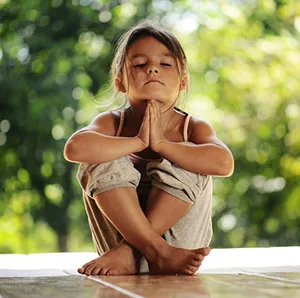 Teach your child to relax. There are countless relaxation methods that help the child calm down. I recommend a book called: “Atentos y tranquilos como una rana” which provides you with tricks to relax the whole family. Relaxation, meditation and yoga are basic disciplines that, if practiced from a very young age, will help them better manage stressful situations.
- Teach them to meditate. Instruct the youngest ones to have moments of calm by imagining that they are in peaceful places such as a beach or flying in space. This helps with soothing music. Also teach them how to know how to breathe in a way that they can extrapolate to moments of tension.
- Balanced diet. Recent research shows that diet is an important factor when it comes to reacting to stress. For this reason, we must take into account what we eat regularly.
- Positive messages before sleeping. Sit with your child for a few minutes and make a summary of the day, thinking about the good things that have happened.
- Sport. Physical activity reduces stress.
Does this resonate with you?
Our team can help. Write to us and we'll guide you with no obligation.