How Mindfulness Helps Improve Your Life and Your Children's

Eugenia Olego Gual
Child, adolescent, and adult psychologist
COPC 16511
Contents
- The MBSR program:
- Scientific evidence:
- Studies in children and adolescents:
- REDES Program:
- Mindfulness in large companies
- Mindfulness in the child population:
- Can we apply Mindfulness to the child population?
- What benefits does it offer?
- How do we introduce Mindfulness to children?
- How we begin:
- The calm button: their breathing:
- Infant:
- Primary:
- Secondary:
- Attention training:
- Infant:
- Primary and secondary:
- Connecting with emotions:
- Infant and primary:
- Secondary:
- Cultivating empathy, solidarity, and love:
“Queremos enseñar que la meditación no es dejar la mente en blanco, sino aprender a ver y a vivir con las cosas tal y como son” (Jon Kabat Zin).
A discovery that has been integrated into Western Medicine and Psychology in recent years is what is known as Mindfulness or Full Attention, defined as the ability to focus our attention on the present with interest, curiosity, and acceptance. Although we may think it is an innovative finding, it is in fact a very ancient practice that originated more than 25 centuries ago in the East. Jon Kabat-Zinn, a scientist, writer, and professor of medicine at the University of Massachusetts (USA), was the one who introduced and spread Mindfulness in our society more than 30 years ago by founding the "Stress Reduction Clinic at the University of Massachusetts". At this clinic, patients with various illnesses and psychological problems were treated, and there Mindfulness was used as a complementary medicine to relieve pain and improve the physical and emotional well-being of these individuals. This technique was practiced through a structured program called Mindfulness based Stress Reduction (MBSR) or Stress Reduction Program based on Mindfulness (REBAP).
This article is long, more than 4,600 words, which is why we give you the option to listen to it.
[audio mp3="/images/blog/2015/01/Mindfulness-infantil-Santa-coloma-barcelona.mp3"][/audio]
Mindfulness is being fully present in the here and now. This may seem simple at first glance, but for most people, paying full attention for a few minutes is no easy task. In fact, many scientists confirm that 100% attention lasts only 3.5 seconds. For this reason, people who are not used to practicing Mindfulness find it difficult to take conscious control of what they are doing at that moment, and most of the time the mind ends up coming and going incessantly between the past and the future. But when we gradually consolidate the ability to meditate and manage to stay more in the present moment, we obtain surprising information. One way to begin understanding the concept of Full Attention would be to choose a simple routine. For example, when eating a mandarin. When we carry out this habit, we do not pay attention to observing the food, smelling it, tasting it, noticing its texture, and so on.
The concept of Mindfulness or Full Attention, originated in Buddhism more than 2,500 years ago, has no religious or esoteric nature; it is described as a dispassionate, moment-to-moment, sustained, non-evaluative attention to the mental processes that include physical sensations, perceptions, emotions, and thought. It is a continuous attention to what we are experiencing in that moment, to the present experience, but without thinking about it, without judging it, without comparing it or analyzing it in any way. In other words, the mind perceives without evaluating what it receives.
The MBSR program:
The MBSR or REBAP program, which began in 1979 at the prestigious University of Massachusetts, consists of intensive training in Mindfulness. It lasts 8 weeks, with 9 sessions in total, and the class is given once a week by instructors certified in MBSR, in addition to daily work at home. The program involves the following points:
- Training and practice of Mindfulness
- Yoga and body awareness
- Exploration of each participant's patterns of behavior, thoughts, and emotions
- Brief readings and group discussions
- A commitment contract on the part of the individual to practice the meditations daily
There are countless benefits offered by this program:
- Reduction of anxiety symptoms
- Increased sense of empathy and spirituality
- Reduction of chronic pain symptoms
- Decreased stress levels in healthy people
- Minimization of Obsessive Compulsive Disorder symptoms
- Increased well-being
- Reduction of the effects of psoriasis
- Prevention of relapse into depression and addictions
Scientific evidence:
In recent years, 4,000 scientific studies have been carried out annually demonstrating the positive effects of practicing Mindfulness in subjects. These studies have been conducted on people with chronic illnesses, health professionals, teachers, students, judicial institutions, employees of large companies, athletes, etc., demonstrating significant improvements at both the physical and psychological levels. Below we will show some of the studies published in recent years.
The University Hospital of Massachusetts carried out the first study to demonstrate that meditating generates changes at the brain level. In the experiment, 16 volunteers were chosen, and magnetic resonance imaging (MRI) of their brain structure was taken two weeks before and after completing the MBSR program. The 16 participants spent 27 minutes each day practicing the exercises required by the program. After the 8 weeks were completed, the MRIs from before and after the program were compared. According to the publication in Psychiatry Research, the following conclusions were reached:
- There was an increase in gray matter in the hippocampus, an area important for learning and memory, and in structures related to self-awareness, compassion, and introspection.
- A decrease in gray matter in the cerebral amygdala was revealed, related to the reduction of stress.
None of these modifications were observed in the control group, which was made up of other volunteers.

In 2011, researchers at Yale University published a study in the journal "Proceedings of the National Academy od Sciences" in which they evaluated the different brain areas that were activated when meditating, choosing individuals who meditated regularly along with others who did not. What they observed is that in the meditators there was a decrease in the activity of the Default Mode Network (located in the posterior cingulate and prefrontal cortex), related to the deficit of attention and anxiety. At the same time, areas related to self-control were activated.
In 2013, a study was carried out led by Andrés Martín, Teresa Rodríguez, Enriqueta Pujol-Ribera, Anna Berenguera, and Jenny Moix Queraltó at the Faculty of Psychology of Bellaterra (UAB) and the University Institute for Research in Primary Care (IDIAP Jordi Gol), under the name "Evaluation of the effectiveness", in which they evaluated the effectiveness of an MBSR program in primary care professionals, published in Gaceta Sanitaria. The study aimed to assess the long-term effectiveness of an MBSR program for primary care professionals regarding burnout (a prolonged stress response due to emotional and interpersonal factors that arise at work), emotional state, empathy, and Mindfulness. 87 primary care professionals participated, and they measured burnout through the Maslach Inventory, emotional alteration through POMS, empathy through Jefferson, and Mindfulness with FFMQ. These measurements were taken at 4 moments: before starting the program, at 8 weeks, at 6 months, and at 12 months. The intervention lasted 1 year, during which there were 2 phases within that period: the first was an intensive one of 28 hours spread over 8 weeks, and the other was a maintenance phase once a month lasting two and a half hours. The results were evident on all scales, improving significantly throughout the entire follow-up, with the FFMQ standing out as it showed major changes in all phases. At the end of the intervention, 94% of the participants indicated improvements in their self-care and professionalism, and 89% managed to continue practicing the exercises on their own. By way of conclusion, the study demonstrates that a Mindfulness-based program reduces burnout, its emotional alteration, improving their empathy and full attention so that health professionals achieve personal and professional quality.
Another interesting article is the one carried out in 2013: "Mindfulness for the reduction of emotional distress in oncology patients", led by Concha León, Rosanna Mirapeix, Tomás Blasco, Esther Jovell, Àngels Arcusa, Andrés Martín-Asuero, and Miquel Àngel Seguí, published in Psicooncología. A study was conducted comparing cancer patients who received an MBSR program complemented with a psychoeducational program with patients who only carried out a standard psychoeducational program. The results demonstrated that the former patients improved in depression, state-anxiety, trait-anxiety, and quality of life. Whereas those who had only received a psychoeducational program improved only in the state-anxiety variable.
In 2014, an article was published, "Effects of Full Awareness on Emotional Regulation", from a study carried out by Alicia Felipe of the Parc Taulí Hospital in Sabadell, Tatiana Rovira of the UAB, and Andrés Martín Asuero, founder of the Esmindfulness Institute of Barcelona. In the study they wanted to investigate the effects of the MBSR program on emotional regulation in a non-clinical population. The sample was made up of a group of 33 people who carried out the program and 14 control people. In the results there was a significant improvement in the emotional regulation index compared to the control group. In other words, the practice of Mindfulness helps to manage emotions in a more adaptive way, which contributes to better psychological well-being and the prevention of psychological disorders related to stress.
Studies in children and adolescents:
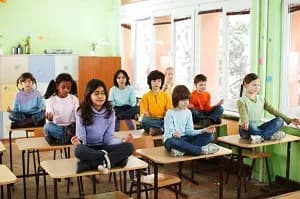
Due to the success of Mindfulness practice in adults, this has led to an increase in studies on the youngest population. We show some of them:
The Garrison Institute in New York, an organization that studies and promotes meditation in classrooms, carried out a study in 2004 in different schools. The results demonstrated that the practice of Mindfulness in classrooms generates more sensitivity, more concentration, and less stress in the students.
Professor Luis López carried out a doctoral thesis directed by the Research and Psychopedagogical Guidance Group of the Universitat de Barcelona (UB), led by Rafael Bisquerra and Manuel Álvarez, and it was published in LA VANGUARDIA. Eight teachers experimented with relaxation techniques through the TREVA program (Experiential Relaxation Techniques Applied to the Classroom) on 420 Secondary and Baccalaureate students (between 12 and 18 years old). It consisted of carrying out methods of breathing, posture, and mental silence during the first 7-10 minutes of the first class of the day, the one after recess, and the first one in the afternoon. Although it might seem that this investment would mean less time available to teach, the reality is not so, since the results spoke for themselves: 86% of the students enjoyed the experience of relaxing, 80% considered this activity useful, and one in seven students claimed to have truly relaxed, feeling calmer. 67% claimed to be more concentrated after the relaxation, and more than 51.2% felt they had more energy to face academic tasks. For 60% of the students, the atmosphere in the classroom improved after the relaxation. Currently, a dozen public, semi-private, and private schools in Catalonia, covering Infant, Primary, and Secondary education, apply the TREVA program.
In 2011-2012, the Mindful Schools association, together with the University of California, carried out a study with 937 children and 47 teachers in 3 public schools. Through 6 weeks of Mindfulness training, positive results were perceived in attention, self-control, care for oneself and for others.
REDES Program:
"La felicidad no es una sucesión de placeres sino una forma de ser (Matthieu Ricard)"
REDES is a science outreach television program presented by Eduard Punset. In program 60, "The science of compassion" was broadcast, in which Eduard conducted an interview with the molecular biologist (Nobel prize winner) and Buddhist monk Matthieu Ricard. Two questions were posed: shouldn't our children learn at school to be happier and better? Isn't that what any mother or father wants today? To allow compassion and the good nature that every human being carries within to emerge, science is discovering the benefits of meditation. Learning to meditate can help us live with a clearer mind that is more skilled at dealing with negative thoughts and fostering positive thoughts.
To demonstrate the benefits of meditation, a study was carried out with some expert meditators (including Matthieu Ricard), and the results were as follows:
- In the left prefrontal cortex, related to happiness, there was greater activity.
- In the right prefrontal cortex, related to depression, less activity was manifested.
- In the amygdala, related to fear and anger, there was less activity.
The results demonstrate that expert meditators undergo brain changes that help them be happier. Is it necessary for us to be monks to achieve such results? Another study was carried out with employees of a company. The individuals inexperienced in meditation had to meditate 30 minutes a day for 3 months. The results led to a decrease in anxiety levels and greater activity in the left prefrontal cortex. Therefore, we do not need to become Buddhist monks to see the benefits that meditation offers.
According to Matthieu Ricard, the mind wanders a lot, like that of a restless monkey. We need a calm mind to see more clearly. But how do we do it? We use an object of attention: the breath. When you are focused on the breath, you cannot see it, which makes it easier to notice whether you get distracted or not. If you wander, you can always return to the same focus of attention, the breath. Obviously it is not an easy process. Likewise, we tend to verbalize "I can't," "I'm no good at concentrating." We underestimate our capacity to transform our mind; but if you persist again and again, as when you learn to play the guitar, the mind calms down and becomes clearer. By becoming sharper, it helps us be more aware of our thoughts and emotions, achieving a state of self-awareness and inner equanimity that prevents our emotions and thoughts from overwhelming us. If we can change our mind, we will also modify our inner self, coming to develop more humane concepts such as altruism and compassion. It is necessary to make great reforms starting with education, focusing our attention not so much on academic content but on human qualities, and this would help to create a more compassionate society, making us more humane, better people.
REDES Program 60 (Science of compassion):
Mindfulness in large companies
Many companies around the world are already offering their employees training in Mindfulness. In the case of Google, the program is called "Search Inside Yourself", and its structure is similar to that of MBSR. But the major tech company is not the only one: Toyota, Bank of America, Starbucks, and Deutsche Bank are other examples.
And in Spain there are already companies that have started Mindfulness: Endesa, Caser, Repsol, Meta4, and many other SMEs such as Azvase and Persei Consulting.
The results confirm that people are more concentrated, there is a better relationship among the workers, and more empathy. This has had a positive impact on the quality of the work.
Mindfulness in the child population:
Can we apply Mindfulness to the child population?
Until relatively few years ago, meditation in children was an unexplored field. People thought that meditating was a complicated process for the youngest, but this is not the case. In fact, children have the innate ability to be in the here and now. The younger they are, the more focused they are on the present, and once they grow older this is gradually lost; therefore, why not enhance this precious quality?
We currently live in a society with constant stress. We receive information incessantly from different places, to the point of being unable to focus our attention for long. We train the mind to be like a chimpanzee, jumping from thought to thought, unable to concentrate on what is being done at that moment, thus missing a lot of relevant information. This toxic over-stimulation means that, in the long term, attention and concentration problems increase. To make matters worse, we help to enhance impulsivity, since we do not have time to analyze what we are thinking. If we teach children how to meditate, we will help to prevent all of this, in addition to other great changes occurring. On a more external level, we will get children to pay more attention to what they are doing, and on an internal level, as they will be more attentive, they will have more time to stop and think, generating more rational beings. We will also enhance their self-awareness, and help them get to know themselves better, making it easier for them to manage their emotions, connect with others, and understand them, thus cultivating more general qualities such as empathy, fairness, and compassion.
Mindfulness can begin to be introduced from a very young age. In Spain it is increasingly observed how many nurseries, kindergartens, primary and secondary schools work with Mindfulness within the classrooms, and the effects are very beneficial. In addition, the families that implement full attention with their children achieve better family communication.
What benefits does it offer?
The benefits provided by the regular practice of Mindfulness or full attention are:
- Improving their cognitive abilities: they learn to be more attentive and concentrated on what they are doing and at the same time stimulate their memory. All of this would lead to an improvement in learning.
- Optimizing their self-control: If we are more attentive, we will be more aware of what we think and feel. This will help so that they are not so impulsive in the face of situations.
- Development of their self-awareness. By reducing impulsivity, we help children to reflect internally, giving rise to them having knowledge of themselves.
- Learning to manage their thoughts and emotions: By observing ourselves more, we analyze and better manage our thoughts and emotions.
- Improving social skills: If we understand all of the above, we will also be able to understand others, thus facilitating a better relationship with others.
- Development of empathy: Thanks to all of the above, we help them develop great qualities such as empathy and solidarity. If we know ourselves better, we can understand others and thus easily put ourselves in someone else's shoes.
- Happiness and personal well-being: If we teach them to concentrate better, to contemplate the world without judgment, to accept themselves, and to understand others, we can turn the youngest into better adults.
How do we introduce Mindfulness to children?
"Cuando hablamos de Mindfulness no hablamos de una técnica, sino de una filosofía de vida (E.O.)"
Stop and think of a moment from your childhood that you enjoyed and that you remember as well as if you had lived it yesterday. A bike ride with your friends while you were enjoying the wind, the sun, and the smell of the countryside; or a moment with your grandparents strolling through the market, listening to the noise of the people and observing the different types of food. They are those moments that you have lived totally consciously, which is why you remember them in such detail. Both parents and educators should enhance these situations and thus help our children see how wonderful it is to live life at every moment, and not allow them to miss a single detail of what life is offering them.
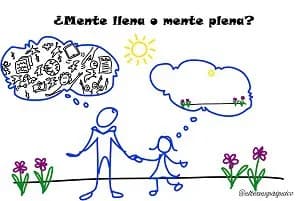
This would be a graphic example of the difference between living with the attention full of things and with Full Attention (Mindfulness). Imagine that you go to the mountains for a walk. How many times has your mind gone to the past or to the future? How many times have you looked at your phone during the hike? You don't realize how many things one misses by not being concentrated in that moment. Therefore, we are responsible for ensuring that children's minds are not filled with harmful information and thus have a full mind to live the present. Let us teach them to have the capacity to marvel at life. Once we can understand what Mindfulness wants to convey to us, we will know how to teach our children, and thus we will educate them so that they are happier and can cultivate their "being" from their earliest years.
How we begin:
When we learn to play an instrument, it is essential to have discipline and perseverance. With Mindfulness, the same process is required. In addition, in order to get them to internalize it, we need it to be a process that goes from the outside in.
As tutors or parents, we are going to help them in this process by doing it in a *simple, fun, and patient way (SDP).*
The calm button: their breathing:

The first step to introduce Mindfulness to children is through breathing. We could use a candle or a light that would help to focus our attention, but since it is visual, the mind would easily stray from the focus, getting lost in thoughts. On the other hand, breathing, being something we cannot see, keeps us constantly focused on how we breathe.
Although it may seem a difficult task to implement with children, it is not at all if we apply the three pillars above: SDP. We are going to show you some simple techniques, dividing them by age group (let us remember that the techniques can be applied to all ages by adapting them):
Infant:
- We are going to teach them simple exercises by blowing various objects: pinwheels, toilet paper,… We can also invite them to put their hand in front of their mouth so that when they exhale (through the mouth or nose) they feel the warmth of their hand. We are going to make them aware of their breathing.
- We will tell them to imagine that they are balloons and to choose what color they want to be. They are going to inflate their whole body by taking in air through the nose, and they will deflate little by little, letting the air out through the mouth.
- Rocking a doll: So that they have awareness of breathing through the chest and through the belly, we will place a doll first on the chest and then on the belly, and we suggest that they rock it until the doll has fallen asleep.
Primary:
The exercises mentioned for infants can also be applied with primary-age children. We will add:
- We tell them to focus their attention on counting breaths. It is especially good for children who like numbers. We will start with 2 seconds inhaling and 2 exhaling, and we will gradually increase the seconds so that their breathing is longer and calmer.
Secondary:
- Have them imagine that their breathing turns into calm waves of the sea that come and go.
- One minute of attention to their breathing. Above all, before starting to study, it helps to have a moment of silence with oneself.
Attention training:
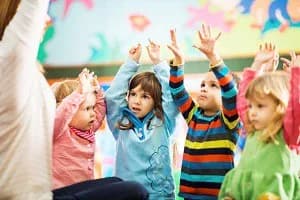
First of all, parents or tutors, I would like you to pay attention to your next meal: When you are in front of the plate, stop and observe the contents it has, the colors you see; with your nose, smell it slowly; with your hands, pick up the cutlery and notice its structure; with your mouth, notice the texture and flavor; finally, listen to the sound while you are digesting the food. Try not to judge, just observe. Do all of this slowly, enjoy every moment without missing a single detail.
Just as, to exercise our muscles, we need to do sport, to stimulate attention the same process is required: regular and conscious training. We are going to offer you some simple exercises.
For all ages, we recommend that they begin by exercising their 5 senses. We will give you activities for each of them:
- Touch: Through massages between the children, touching different textures (sand, cotton, jam,...), etc. It is not about guessing, but about touching each thing as if they did not recognize it and keeping the sensation.
- Smell: Smelling different fragrances, food,…
- Hearing: listening to the waves of the sea, different instruments; listening to stories. For example: "Correprisas y tumbona" or "El Castor estressat"
- Taste: tasting different types of food
- Sight: We can ask them what colors the mother's/father's clothes are…
As we have done in the previous section, we will provide other ideas for working on attention according to the age range:
Infant:
At these ages we are going to have them focus their attention on exploring the environment that surrounds them, and thus sharpen their perception of the surroundings.
- Minute of silence: We tell them to close their eyes and to listen to all the noises that occur throughout this time.
- Listening to bells: We have little bells with different sounds. We blindfold them and tell them to listen attentively to the sound. Afterwards they will have to guess which one was used.
- Green shower: They are going to imagine that they have a shower with green-colored water above their head. Little by little, and with the help of their hands, the blue water goes down through their whole body to the feet.
Primary and secondary:
- Take some everyday objects (a ball, building blocks, a stapler, etc.) and cover them with a blanket. You explain the game to them and warn them that, until you remove the blanket, they cannot look. Then lift the blanket for about ten seconds and cover it again. Then they have to write down which objects they are able to remember.
- Visualization to improve attention and concentration. Children at these ages have a lot of imagination, so it will be easy for them to concentrate on any situation. There are countless visualizations you can offer them: a beach, diving under the water, walking through a forest, flying,..
Connecting with emotions:
All of us suffer from mood swings, and many times we do not know why it happens to us. But when we are aware of our emotions, we can accept them and thus be able to control them. This also happens to children. For this reason, in this section, we are going to help them listen to their inner self consciously and thus manage to regulate their emotions.
Infant and primary:
- Currently there are many stories that talk about emotions. An interesting one that can be used for both infant and primary would be: "The Color Monster". Once told, you organize with the child containers of different colors, where each one will reflect an emotion. With one or several little stones, you tell them to put them in one or more containers depending on how they have felt. Afterwards we can have small reflections with the child about how they have felt.
- Drawing through music. Another way to express their emotions is to draw how they feel while listening to music.
Secondary:
- Visualizations are very effective when it comes to detecting emotions. For example, telling them to lie down and to gradually notice different sensations that are occurring to them, how they are feeling, to listen to their inner self. There are many guided meditations on the internet that can help.
Cultivating empathy, solidarity, and love:

How beautiful to be able to have moments to build these precious values. For this reason, we will provide you with some techniques to be able to cultivate them. By adapting them, they can be applied to all ages.
- Moment of wishes: Every day, before sleeping, tell your child to close their eyes and to make wishes for themselves: "I wish to be happier," "I wish to smile more every day,"… And then to wish for the people who are with them at that moment: "I wish, mom, that you be happier," "I wish you a good day"…; finally, to wish for other people, even those we do not get along with.
- Giving thanks: how lovely to reach the end of the day and be able to give thanks for everything that has happened to us. Examples would be: Thank you for the delicious cola cao this morning, thank you for having such good friends, thank you dad for coming to pick me up from school and giving me a huge kiss, thank you for having this beautiful room full of toys,….
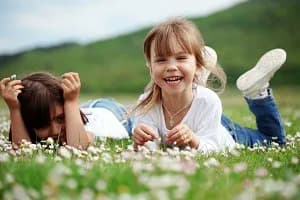
To conclude this article, I would like to offer you a small reflection. We live in a society of constant stress, which leads us to have a life in a hurry, and during the process we are missing interesting things. This happens to us, but it also happens to children. Think that we are their models, and as we act, they will also act. Therefore, teaching mindfulness to the youngest is the best gift we can give them.
After all the discoveries made up to today, it has been demonstrated that Mindfulness can be of great help to all children, especially for those who are too stressed, scattered, worried, so that they can manage to relax. But I want to go further. Full Attention can help children become more humane beings and become more aware of how wonderful and delicate the world is.
For more information, you can get in touch with El Teu Espai
Does this resonate with you?
Our team can help. Write to us and we'll guide you with no obligation.