What is high ability? How can I tell if my child has high abilities? What should I do if I have any suspicion?

Mireia Navarro Vera
Director and psychologist
COPC 10631
Contents
Children and adolescents with high abilities demonstrate notably elevated responses, or the potential needed to achieve them, compared with other children of the same age and environment. They have high levels of capacity in the areas of cognition, creativity and art, show an exceptional capacity to be leaders or stand out in specific academic subjects.
Are there different profiles?
Among students with high abilities we can distinguish three main profiles:
Giftedness:
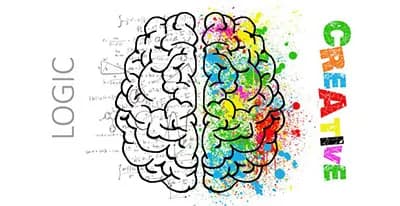
A gifted child is understood to be one who presents elevated levels in all of their intellectual resources, such as logical reasoning, creativity, memory and the uptake of information.
- On the one hand, the intellectual configuration of a gifted child enables effective production in any task they undertake, and on the other hand, there is a very important qualitative difference, since by having multiple resources, they can also use these in a combined way, that is, they will be able to solve complex problems that are impossible to carry out with a single resource.
Talent:
A child is said to have talent when they show a high aptitude in one area (for example, verbal, logical or creative talent), but in the rest of the areas they present very normal levels, or in some cases below.
Precocity:
It is not an intellectual phenomenon as such, but a developmental one, which implies a faster pace of development, but at no point does it refer to higher levels of development. Precocious children tend to manifest a greater number of intellectual resources than their peers during maturation. Once intellectual maturation is complete, their capacities will be at the same level as their peers.
What are the most obvious signs and from what ages are they noticeable?
There are some traits that are common to children with high intellectual abilities and that both the family and the school tend to perceive early on. While they do not necessarily all occur together, most of them do tend to converge.
From birth to 2 years:
- They are very demanding babies,
- They have a high level of psychomotor coordination, they lift their head before one month of life.
- They can vocalize two different sounds at around a month and a half, say their first word at around 5 months and by 6 months they already respond to their name.
- They are able to hold a conversation at two years old and their vocabulary is extensive and fluent for their age.
- They memorize stories, sayings or songs at around two and a half years old.
- They control sphincters at two years old.
- They are able to draw the human figure at around two and a half years old.
- They do puzzles of 20 pieces when they are two years old or two and a half years old.
Between 3 and 6 years:
- They learn to read and write spontaneously between the ages of three and four and enjoy reading.
- They have a great imagination and creativity. They enjoy creating stories, tales, drawings...
- From a very young age they show a privileged memory and tend to be very perfectionist.
- Sensory hypersensitivity, that is, they react in an exaggerated way to anything that disturbs any of the five senses, such as excessive light, noise, an itchy label or a strong smell, among other examples.
- They tend to be very intense emotionally speaking and also tend to worry about and identify the emotions of others.
- They tend to manifest a very precocious interest in certain existential topics such as religion, morality, the universe or death. Interest in these topics can generate in them a state of anxiety that is difficult to manage, since emotionally they are not prepared to think about these kinds of things and that can cause them fear and insecurity.
- They have an insatiable curiosity and understand explanations very quickly.
- They get distracted frequently when something does not capture their interest. Their brain goes so fast that everything that is not a priority for them takes a back seat.
From 6 years onwards:
- They tend to enjoy very specific leisure activities that are uncommon among other children of their age. It is common for them to like chess, which fosters their logical thinking and stimulates them by continually facing other children, calculation, which represents a challenge and mental speed, or painting and music because it fosters their creative side.
- They do not usually show interest in sports and this leads them to have poorer social relationships. They find it hard to find hobbies in common with other children of their age (sports, cartoons...), so they feel more comfortable relating to adults.
- They are very independent and competitive, so sometimes they have tantrums or behaviors that could be considered below the emotional maturity assumed for their age.
- They show a great sense of justice and an advanced sense of humor, great sensitivity, perfectionism, strong feelings and emotions.
- They question any authority that does not make sense to them, so it is difficult for them to accept rules if these are not well argued for them.
- They have a critical and divergent way of thinking, that is, they like to look for possible solutions to a single problem and are very creative when it comes to addressing different matters.
- Presence of leadership skills.
If parents suspect their child has high abilities, what should they do?
- Go to an expert as soon as possible so they can confirm or rule out the diagnosis. Detection at early ages favors the channeling of all their potential and helps parents begin to understand and empathize with the real needs of their child.
- Being gifted is not a characteristic, it is a way of being and therefore, a different way of understanding and processing reality. In childhood, this can be very difficult because they perceive much more information than they can manage, the world becomes at times hostile, slow and incomprehensible to them. Other children have very different interests from theirs and do not seem to understand them, and even many parents who do not know that their child is different try by all means to make them behave according to the pattern established for the average child of their age, which gives rise to many disagreements, loneliness and unhappiness.
Does this resonate with you?
Our team can help. Write to us and we'll guide you with no obligation.