Should we reward and punish our children so they get good grades?

Mireia Navarro Vera
Director and psychologist
COPC 10631
Contents
- 7 keys to motivate your children to get good grades:
- 1. Create a habit in a positive way
- 2. Praise their effort, not just their results
- 3. Don't use rewards. Rewarding good grades distracts their attention
- 4. Don't punish a failure
- 5. Celebrate and share their good grades
- 6. Take their abilities into account
- 7. Don't compare
The answer to this question will have to wait. First, I want to tell you a story:
"María was a fairly diligent girl with her homework. Until she was 8 years old, her parents didn't have to make any effort for her to get good grades. But with the arrival of multiplication tables, things changed. Her parents tried everything and every year they promised her a gift if she passed maths. She almost always ended up passing, and the gifts increased in value as the girl grew older and, with her, her demands. Every year the same pattern repeated itself: she failed every term and only passed at the end, when her parents promised her the gift. Tired of the blackmail and the distress generated throughout the school year, they got in touch with me. A bad habit had developed and now it was time to change it."
But the worst part of this story is not María's bad grades; the truly tragic thing was that she had learned nothing about effort, motivation, or obligations. Each time the gifts were bigger and she demanded them in order to pass. What started as motivation ended up as genuine blackmail.
We psychologists talk a lot about motivation and it's important to clearly distinguish two types:
Intrinsic motivation: in which the only incentive is carrying out the behaviour itself. What motivates us to carry out that behaviour is inherent to ourselves, for example, when we practise a sport we enjoy or to surpass ourselves.
Extrinsic motivation: here the incentive is on the outside; they are reinforcers or positive or negative incentives, external to ourselves and to the activity. It would be the salary from our job or a material good in exchange for something.
You don't need to be a psychologist to sense which motivation is the one that sustains the behaviour over time, the one that will keep us truly motivated and will make us put in the effort. There is no greater satisfaction than doing something to better ourselves and achieving it. There is nothing that generates greater weariness than doing something to obtain a material good completely unrelated to what we are doing; the pleasure of the material good fades so quickly that each time we need a bigger good to make the same effort.

This does not mean that we should never use reward or punishment. It means that we must know when and how to use them. As a general rule, we will not use them to get our children to carry out their obligations and responsibilities. We should not reward household routines such as picking up their clothes, setting the table, or making their bed. Nor for fulfilling their obligations such as studying, doing their homework, attending their extracurricular activities, etc...
When our children don't fulfil their obligations they should have logical consequences; rather than a punishment, it should be a withdrawal of privileges. If today they haven't made their bed before going to school, they will have to make it in the afternoon and will lose their little bit of television time. It is not a punishment, it is a logical consequence of their behaviour.
But the best alternative will always be positive reinforcement, praise, commendation, and patient support to create habits. In the example of the bed, first it will be an activity we do together until they learn it and then we will praise them when they do it on their own. It is about generating behaviours that should endure over time. Once you have created the habit, it is then a piece of cake ;)
7 keys to motivate your children to get good grades:
1. Create a habit in a positive way
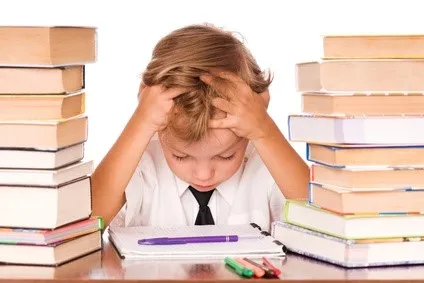
The homework session should be one more opportunity to spend a pleasant time together. It should be an excuse to pay attention to our children. We sit down with them, we look at what they have to do today, we ask them where they are going to start and then we supervise and praise what they have done. We will help them when they have doubts and we will always reinforce their effort, their good handwriting, how much they are learning, etc...
2. Praise their effort, not just their results
If our child has made an effort, has done the homework and has studied for an exam, we will not praise only the grade they have got: if they get a good grade we will tell them that we are proud because they have made an effort and now the results show, and if they get a bad grade, we will tell them that we are proud because they have worked very hard and that even though the results don't reflect all their effort, we are sure that if they persist they will achieve it.
3. Don't use rewards. Rewarding good grades distracts their attention
If I reward a good grade, I direct attention towards the gift and I don't let them focus on what is really important: the satisfaction of having done something well. They will feel happy about the reward and not about their own achievement.
4. Don't punish a failure
If your child has made an effort and got a bad grade, don't use a punishment. If your child hasn't made an effort and has failed, don't use a punishment, make them see the consequences of their lack of effort. Focus their attention on the discomfort of not achieving something.
5. Celebrate and share their good grades
When you receive the grades at this end of the school year, share them with other relatives, grandparents, aunts and uncles... Share their successes and celebrate them as a family (an ice cream together, a special outing...). These are positive reinforcers that demonstrate how proud we are of them. The difference with the material reward is that when we promise a reward in exchange for a good grade, we turn motivation from intrinsic into extrinsic, and here lies the mistake. When we reinforce the behaviour with praise, once it has been carried out, we foster intrinsic motivation and we show them that we care about their effort, that we feel proud and that we value their achievements.
6. Take their abilities into account
Not all children have the same skills. There are those who are very good at maths and those who are good at language or football. If you think there is a subject that is harder for them than others, seek help, talk to their teachers and assess the need for extra support. Don't ask for more than they can give, you will create frustration. We must be aware of their limitations and support them so that they give the best of themselves, but the best within the limits of their possibilities. Let's not tell a fish to fly. Always foster their skills; if you see that something interests them, that there is something they are good at, support them in that, it will be their success.
7. Don't compare
Closely linked to the previous point, each one is good at what they are good at. Don't compare them with siblings or friends, that doesn't motivate them, it frustrates them. The message you send is: you are not as good! Each person is unique and that's how they should remain.
Returning to the question at the beginning, I invite you to leave me your answers in a comment:
Should we reward and punish our children so they get good grades?
1. Yes
2. No
3. Almost never
4. Sometimes
Does this resonate with you?
Our team can help. Write to us and we'll guide you with no obligation.