My Child Uses Drugs, What Can I Do?

Mireia Navarro Vera
Director and psychologist
COPC 10631
Contents
Adolescence and drug use often go hand in hand. It is normal at this stage to experiment with substances and to try alcohol, cannabis, or even cocaine and the so-called new psychoactive drugs.
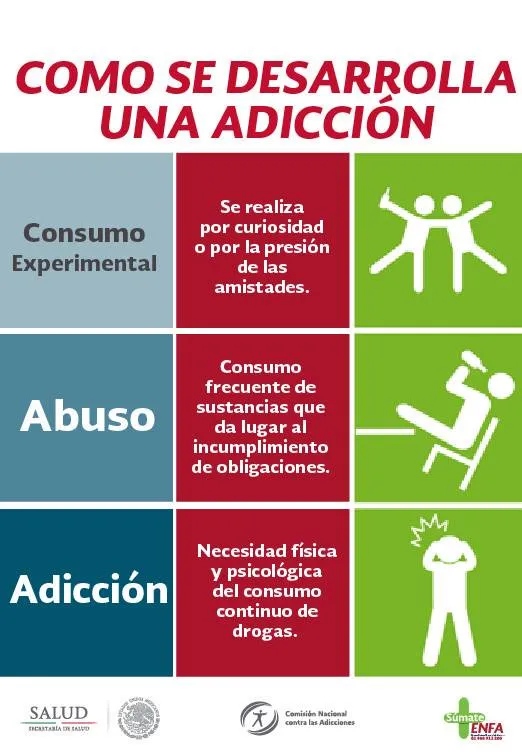
From experimentation to addiction there is a journey, and what you never know is at what moment someone goes from being a user to being an addict; the line that separates them is very thin and very hard to recognize.
First there is occasional use, very much tied to leisure, then it moves on to more continuous use, and in the end the need to use makes the person start giving up everything they liked and devote more and more time and resources to getting high.
What determines whether abuse turns into addiction?
There are many factors that predispose a person to end up being addicted to substances. They are both biological and environmental factors:
1. Associated disorders such as anxiety, ADHD, depression, etc..
People who suffer from some type of mental disorder are more predisposed to having addiction problems. There are several reasons, for example the use of the substance as self-medication; a person who feels anxiety and has a beer that eases their discomfort is more likely to keep drinking alcohol every time they feel anxiety. The use of cannabis by people with sleep problems is also very well known and widespread.
2. Genetic risk: although it is complex to understand all the genes that may be associated, in a recent article, the authors reviewed the available data, identifying up to 1500 genes related to addictions in humans (Genética de las adicciones, Ángela Ibáñez Cuadrado). Family histories of addiction or of other mental disorders are frequently found in people who are addicts. In addition, there is a high correlation between addiction and certain personality traits such as risk-taking and the search for new sensations. Impulsivity is also a determining factor because the person does not think about the consequences of using.
3. Loneliness and/or conflictive personal relationships: an adolescent who feels alone, who does not feel accepted by their peer group, or who has conflictive personal relationships with family or partner, will be more predisposed.
4. Unemployment or dropping out of studies: too much free time and scarce motivation can also lead to an increase in use and therefore to a greater risk of getting hooked.
5. Poor discipline and supervision from parents: a negligent parenting style at home can foster greater freedom to use.
How will I know things are going from bad to worse?
- Their personal appearance has deteriorated, they have dark circles under their eyes, an irritated nose, they cover their arms.
- They hang out with a new group of friends and refuse to give details about who they are and what they do.
- They show changes in behavior in their arrival times, skip classes or their routine activities.
- They lose interest in their studies or other things that interested them before. They have irresponsible behaviors.
- They show alterations in their usual character, tend toward isolation, stay too long in the bathroom. They are more restless and/or irritable.
- They have started to have extra expenses and get tangled up trying to justify them with lies and excuses. They lie more than they talk.
What can I do as a parent?
“María and Javi came into my office very distressed; their 15-year-old son had come home high and they had a big fight. They could not believe that their son could become so aggressive with them and in the end they called 112 because they could not control the situation.
And now they don't know what to do, how to help their son. They think there is no solution anymore, that it is their fault for not having been more attentive, and that they have lost their son forever.”
These thoughts did not help them at all; they only generated more distress, fear, and therefore paralysis.
1. The talk
The first thing to do in a situation of substance use is not to lose your temper and not to think it is the worst of the worst. If your child comes home high, the best thing is to avoid the conflict, in those circumstances, because they can become very aggressive.
We will leave the conversation for tomorrow, thus avoiding a situation of loss of control.
The next day, we will not start the conversation with reproaches or shouting, nor blaming the adolescent “after everything we have done for you and look how you repay us” because then they will not give us the information we need. They will put up a wall and it will stop being a conversation and become a monologue, a parental sermon of emotional venting that leads me nowhere.
What we need to know is what they have used, since when they have been taking it, how often….we want to know if it is use, abuse, or an addiction. This is what matters to us.
We will take the opportunity to tell them that we are totally against the use of any type of drugs.
2. Prevention
If we are dealing with occasional use, we will seek prevention, talks for adolescents that address these topics (there are associations that have great prevention plans for adolescents), we will explain to them what happened to a friend of ours who used drugs, how they started using when going out partying and how they ended up getting high every day. The stories of people who have gone through that are a great help. We will start to control certain things: money, what they spend it on, we are not going to fund their use. If we find drugs in their room we will throw them away without concession. And we will warn them that if they come home high again, the control measures will be more drastic.
In the end, the number of times they come home high is a thermometer of their level of addiction. If the adolescent is no longer able to control how they arrive home, then the problem is intensifying.
It is important that we parents are informed about the drugs that exist and their effects. There are online courses from proyecto hombre that can help us a lot.
3. Addiction
If our child has already crossed the barrier of abuse, there will be few things we can do, but very important ones. It will also depend on the addict (becoming aware of the illness) and on the professionals who can treat them.
We must not forget that addiction is an illness. You don't medicate your child yourself when they are ill, right? Nor do you operate on their tonsils? Well, you won't be able to get them out of an addiction on your own either. The help of professionals will be needed.
Many times, until the addict finds themselves stuck in the pit, they do not react. That is why, however hard it is for us, we must allow them to experience firsthand all the consequences of using:
- Don't pay the debts. We will not fund their use in any way.
- Don't turn your home into their hotel. If they don't arrive at the time we all have dinner, they don't have dinner or they prepare it themselves. Don't do their laundry if they don't stop going out at night. The concept is: if you do drugs, we don't support you, you lose your privileges in this house. In serious cases, the solution may be to throw them out of the house.
- Don't pay for their things. We will not buy them tobacco if they smoke (because they have no money since they spent it on drugs) or the movie ticket to go with a special friend (even if they beg us and we know it is a friend who does not use). They have to suffer the consequences of spending all their money on drugs, and the consequences are that they have no money left for everything else.
- Don't go pick them up. If they call us because they have run out of money in the middle of nowhere and can't get back home, we will let them suffer the consequences and let them come walking or sneak onto the train.
- Make it clear to them that they will have all the family's support the day they decide to stop using drugs. All this support that we have withdrawn, we will give it back to them unconditionally the day they tell us they are determined to quit.
I know that doing all this is not easy at all, but it is very important that the addict becomes aware of their level of addiction and the only way is through the consequences of their use. If I cushion them and overprotect them, they will not experience all of this firsthand and I will prolong their process even more, giving the drug more time to turn them into an even more addicted person.
To get through this whole process better, the ideal thing is to let yourself be advised by a good team of professionals and, the day they decide to quit, to put yourselves in their hands. The road will be long and even if they have the will to get out, that will will falter at many moments, which is why they need professional help.
Does this resonate with you?
Our team can help. Write to us and we'll guide you with no obligation.