How to talk about death with our children?

Mireia Navarro Vera
Director and psychologist
COPC 10631
Contents
Why we should not hide death from children
Many adults want to protect their children from the death of a loved one and therefore from the distress and suffering that it causes, and for this reason children are sometimes hidden from facts such as the passing of a friend or family member.
Parents often don't know how to face this situation, and some of the answers we give to our children who are worried about what is happening are: "grandpa has gone on a trip", "grandma is with the little angels" or "they can't come to the phone right now", among others.
It is better not to act this way; instead, children should be told what has happened, but always with words they can understand and grasp, and in this way we will help them understand the fears they may feel.
Children are curious and they worry about the situations they see and that happen around us; they don't understand what has happened with their friend, family member, grandpa, etc... and why everyone around them appears saddened and sad.
Childhood grief: how children experience it by age
Grief in children is different from that of adults and it also depends on their age and on the way adults inform them about the situation.
Generally, adults have many doubts when explaining these situations and sometimes they can confuse children even more.
Parents want to protect their child and try to keep their child from feeling suffering, pain, or sadness, but instead, as with many other things in life, it is better to prepare them for these situations.
Interpretations according to age
INTERPRETATIONS ACCORDING TO AGE:
- In early childhood:

They tend to feel guilty and to take responsibility for certain actions. We must keep in mind that during the childhood stage (3-5 years) children develop magical thinking and may come to think that a fight or an argument is the cause of a death. At the same time, at these ages they do not understand the sense of the irreversibility of death.
- Around 6-8 years: they tend to act just as they feel and may ask direct questions, since they tend to be curious.
- From 8 years onward: they can begin to understand that the person who has died they are not going to see again, since they comprehend the irreversibility of death.
We should also speak clearly when a family member or friend is seriously ill, always using words appropriate to their age.
Later reactions in the child
LATER REACTIONS.
Later reactions can be very varied, ranging from:
- The child who seems to give it no importance and therefore does not ask or talk about the subject
- Fear that the same thing could happen to another family member
- Feelings of guilt
- Having nightmares or difficulties falling asleep
- Difficulties concentrating
- Anxiety
- Anger
If you are interested in expanding the information about childhood grief, you can read our post: Grief in children
Strategies and guidelines for breaking the news to them
STRATEGIES AND GUIDELINES FOR BREAKING THE NEWS TO THEM
- Explain death with real, easy-to-understand and simple words
- That the child understands they are not to blame for what has happened
- Take into account the child's fears and fantasies
- That the child understands that there will always be someone who is going to take care of them
- Speak to them with great affection
How to support the child after the news
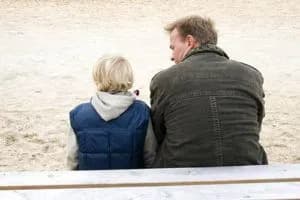
If a child were to ask us about the cause of the death, it is important to emphasize that it was not their fault, since it is very likely that at certain ages they will take responsibility for it and blame themselves, thinking it was the fault of their bad behavior.
We should not hide our feelings of sorrow or weeping (but also not lose emotional self-control), just as we must let the child also be able to freely express their feelings and emotions and support them.
It would also be advisable to talk with our child's teacher, so that they know about the situation and in this way they can help the child if needed.
On the other hand, when possible, it would be advisable to continue with the children's usual routines as much as possible, that is, to continue with the same habits they had before and to encourage positive thoughts.
With all of this, we emphasize that it is not advisable to protect children from topics such as death. They have the right to be informed in a simple, clear and truthful way, and at the same time to express their feelings freely about the death of a loved one.
Recommended books for dealing with the topic
WE RECOMMEND SOME USEFUL BOOKS FOR DEALING WITH THE TOPIC:
- Cómo ayudar a los niños a afrontar la pérdida de un ser querido. A manual for adults by William Kroen (2011)

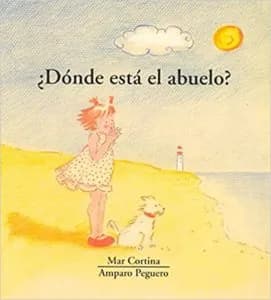
-¿Dónde está el abuelo? by Mar Cortina. Editorial El Triciclo.
Does this resonate with you?
Our team can help. Write to us and we'll guide you with no obligation.