How can we help the child during their parents' divorce?

Mireia Navarro Vera
Director and psychologist
COPC 10631
Contents
The impact of divorce on children
Nowadays, many married couples decide, after several years of living together, to go their separate ways.
This situation in itself is already complicated emotionally as well as organizationally and economically, but when there are children involved it becomes even more complicated.
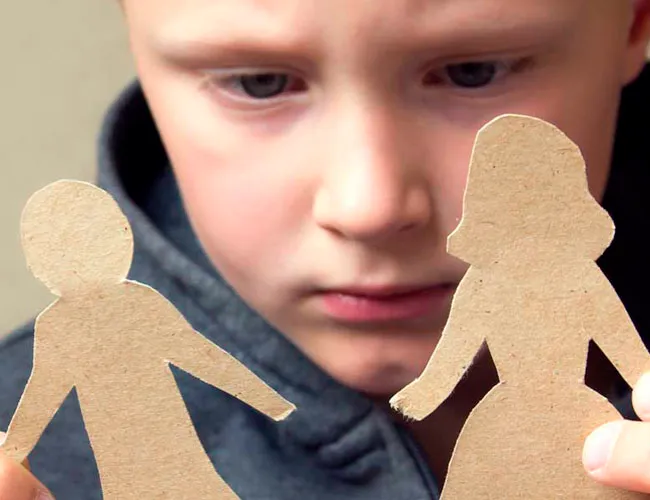
It can happen, even if we do it unintentionally, that the children come off worse in these situations because the parents let themselves be carried away by their feelings and act in a certain way that hurts the children.
For children, the situation of their parents separating is already painful enough in itself, without making it even more traumatic.
How should we break the news?

How to break the news to them is the first big dilemma that parents usually face once they have made the decision to separate, and we must do it while trying to cause them as little harm as possible.
The best possible way would be:
- Telling them with both parents together.
- Answering all their questions in a way they can understand but without giving all kinds of details.
When parents divorce, it does not mean that they stop loving their child, and this is the first thing our children need to be clear about. They need reassurance about this.
It is important to convey to them that their parents' care will continue to be present.
Children cannot do anything to make their parents not divorce or separate, nor on the contrary to make them live together again, since they are not to blame for their parents' divorce, even though they may frequently think so. That is why children should never blame themselves. In other words, they are not responsible for their parents' separation and therefore they cannot, even if they want to, put the couple back together. This is extremely important since minors may feel guilty about their parents' separation.
And after the separation?
Once the parents have separated, we advise:
- Not changing the children's routines and daily habits.
- Trying to make as few changes as possible, whether of school, friends or home.
- Trying to ensure that the child has a room of their own with what they need, such as: clothes, school materials and toys, among other things.
At the same time, it is recommended to inform the school about everything that is happening so they can take it into consideration, since it may happen that the child behaves differently than usual during and after this process.
Behaviors and comments we should avoid

There are a series of comments that parents should avoid in order to help their children gradually accept this situation:
- Confrontations in front of the children.
- Not turning them against the other parent.
- Avoiding speaking badly about the other in front of the child, both parents as well as relatives and friends.
- Not using the child as blackmail to harm the other parent.
On the other hand, it is important not to do things for them that they already knew how to do and had mastered. Sometimes it happens that, as a result of the separation, parents let the child sleep in their bed again, and that way they don't feel alone either.
For any child, the separation of their parents involves a loss, and as a consequence we may see various reactions in them that also depend on the child's age.
These children may generally experience emotions of anger, sadness, crying, irritability, feelings of rejection and/or aggressiveness, but little by little these feelings will be overcome so they can live happily and contentedly again. All these feelings are normal at first, but gradually, and if the process is carried out correctly, they will feel better.
If they feel like crying, they should not hide their emotions; it is good to do so since it will serve as an outlet.
We recommend that the child be able to talk with people who offer them trust, which could be a relative, a child who has gone through the same situations, a teacher or a psychologist, among others.
We recommend some books for dealing with separation with your children
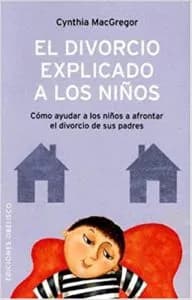
Cynthia MacGregor: “El divorcio explicado a los niño. Cómo ayudar a los niños a afrontar el divorcio de sus padres”. Ed. Obelisco. 2004.
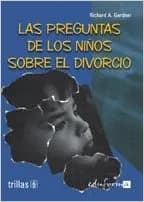
Richard A Gardner: “Las preguntas de los niños sobre el divorcio”. 2005.
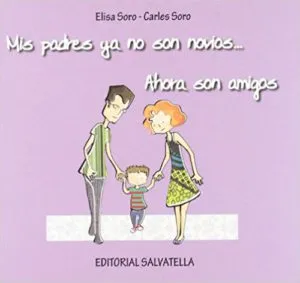
A storybook to read with the little ones: mis padres ya no son novios…ahora son amigos
Does this resonate with you?
Our team can help. Write to us and we'll guide you with no obligation.