Is it possible to educate without punishing?

Mireia Navarro Vera
Director and psychologist
COPC 10631
Contents
Can we raise our children well without using punishment? Will we manage to get them to obey us?
If we don't punish them when they misbehave, then what do we do?
The first time I propose to parents the challenge of educating without punishing, the question they usually ask me is: And then how do we do it?
Our society, our education and even our religion is founded on reward and punishment. Therefore, it's not surprising that we as parents don't know how to do it any other way, because what we have learned is that when you do something wrong, someone punishes you and when you do something well, someone rewards you. If we steal we can go to prison and if we work well we'll get paid at the end of the month…. But deep down we know that all of this is not effective and does not solve the real problem. The one who steals will probably keep stealing if they aren't helped to get a job, and the one who works just okay may earn the same salary as their colleague who works great. Besides, working only for money motivates no one, nor does it make you happy.
But my goal is not to change society, far from it; my goal is to propose another more effective way of raising our children, my goal is to answer the question: And then how do we do it?
Why doesn't punishment work?
Here I leave you my explanation on our YouTube channel
The first reason to educate without punishing is precisely this: punishment doesn't work.
For a long time I have received in my practice parents desperate over their children's bad behavior. I have often found that they are over-punished children, and of course, if I'm punished for ever and ever, my motivation to behave well is nil.
All of this led me to consider the function of punishment, and I came to the conclusion that punishment should teach us something, it should make us behave better. I soon realized that, on very few occasions, punishment fulfilled its function, and I looked for the cause.
This is what I found:
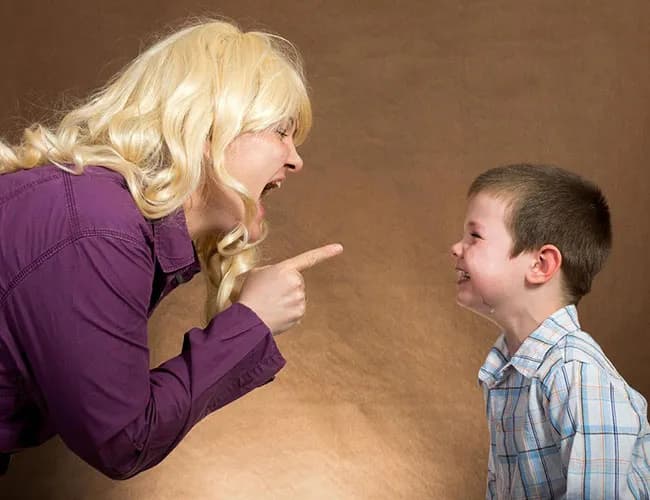
- Very frequently we punish in moments of anger and we tend to use disproportionate and unhelpful punishments.
- Punishments usually have nothing to do with the misbehavior.
- The children's reaction is usually anger (whether contained or not). Anger does not motivate good behavior, it's normally the opposite.
- Very rarely are punishments carried through. And when we do enforce them, they're no guarantee that the child won't make that mistake again.
- Most punishments don't teach anything.
- Many times punishments are a response to my frustration as a parent. When my child misbehaves it exposes my skill as a parent and makes me feel like a failure. In that moment I correct their misbehavior out of anger. Who hasn't found themselves at some point with their child having a tantrum in front of a group of friends? And what do you do?
- Punishments create distress for all members of the family, just like shouting. It makes us feel bad.
- Sometimes punishment seems more like revenge: "today you go the whole day without cartoons" rather than something designed to raise our children well.
Once we reach this conclusion, we are faced with a great challenge: setting limits for our children and getting them to obey us. Teaching them what is right and what is wrong without punishing their misbehavior
If we don't punish, how do we do it?
It's clear that one of our roles as parents is to raise our children, to teach them to dress themselves, to brush their teeth, to eat healthily…but that's not all. Besides creating those habits, we also have to teach them what is right and what is wrong, where it's allowed to run and jump and where they must stay still, how they should speak, greet, apologize…In short, thousands and thousands of lessons that will help them grow and end up being responsible adults. Not bad for a start.
I always say that we parents are habit generators, and when we have one done, it's our turn to go for the next. Each stage has its own lessons. And every learning process takes time and mistakes.
It's clear that more than once we'll find ourselves in situations where our children won't do well, sometimes simply because they don't know how to do better (they're learning) and sometimes because they're tired, irritable, or feel bad about something. Whatever the reason, I'll have to correct that behavior. How?
1. Why did they misbehave?
I'm going to reveal to you what the first question is that I ask myself when my children misbehave:
What have I done wrong?
And I analyze: I'm more on edge than usual, I wasn't clear when setting the rule, I haven't been attentive to their needs,… If I detect the failure here, I correct it. Many times the problem ends here.
It may be that I hesitated when saying NO, then I reaffirm the NO until they understand it, without shouting and without rushing; as soon as they detect that there's nothing to be done, they stop insisting.
Maybe I didn't notice that they were too tired or irritable and that I should be more flexible with the rules. Or sometimes I lack patience, because I'm more on edge or I've had a bad day, to wait for them to do it well, because that usually takes time.
The worse they behave, the worse we're doing it. Therefore, stop and analyze what you can improve.
The second question I ask myself is:
Did they do it on purpose or was it a mistake?
It's important to analyze this. Did my child make a mistake, did they do something wrong because they still don't know how to do better? If so, you have to be patient, every learning process requires time and effort. How long did it take you to get your child to brush their teeth by themselves? And how much more time for them to do it without you reminding them? Well, an average of 10 years; yes, you heard right, 10 years on average to achieve it. So we shouldn't be surprised when they make mistakes.
It could also happen that they did it on purpose; they got so angry that they threw something on the floor and broke it. There's no mistake here, maybe they didn't think it would break or they were so impulsive that they didn't think about the consequences. And here you'll think, I'll have to punish them, right?
Well that won't be much use either, because really here again there's a learning process and it's that of managing emotions, that's why children throw things or sometimes hit, because they don't have control. In a situation like this, where our child has misbehaved on purpose, we'll have to analyze once more what's going on: they're on edge, they're sleepy, they got angry and didn't control their emotions….
The most important thing is to know that even if they did it on purpose, their intention is not simply to annoy their parents. If we understand this, we'll spare ourselves many bad moments. Children, as a general rule, want to please their parents, we carry it in our genes. When we are born we depend on adults to survive for many years of our lives, it would be pointless for us to try to make them angry. It's unnatural. That's why when they misbehave on purpose the cause is usually something else: seeking attention, being tired, frustrated, not feeling loved….Look for the cause and you'll find the solution. Punishment isn't going to fix anything here either.
**Remember: your child doesn't do things wrong simply to annoy you; look for the real cause and you'll have the solution**
2. Do I expect too much of them?
This happens to us frequently, we expect things from them that not even we do well. For example, that they keep track of time in the morning before going to school. We expect them to understand concepts like: hurry, we have 5 minutes left, don't get distracted by the TV, get dressed, we're running late…A child starts to know how to tell time on a clock at approximately 9-10 years old; how can we expect a 5-year-old to know what 5 minutes is? And on top of that to act accordingly and get dressed in a flash. This isn't going to happen. Even as adults, the moment we get distracted, we run late. If you're one of those people whose house fills with shouting, rushing and bad moments in the mornings, our article will interest you.
I also always expect them to obey me the first time and besides I think that if they don't, they're disobedient. A false belief too; if you tell a child who's watching cartoons to brush their teeth and they automatically turn off the TV and go to the bathroom to do it, that child has a problem. What should happen is that you tell them three times or more, and until you go, turn off the TV for them and walk them to the bathroom, they don't obey. If you're patient, when they grow up they'll obey you the second time, with luck.
We must correct our expectations. If a child is playing at the park it's normal that they don't want to go home, don't you think? It's much more fun to keep playing at the park. Therefore, I can't expect them to listen to me the first time. By this I'm not saying you shouldn't set limits, nor do I want you to stay living at the park ;) just that you be patient and understand that what's happening to you is normal. Keep insisting on their upbringing, obedience is an important part to work on but always from patience and perseverance, not from shouting and punishment.
Above all it happens to us with emotional control; when a child gets angry and hits or throws things on the floor, we can't stand it. What do you do when you get angry? Maybe you don't hit your boss, but I'm sure you don't lack the urge. They haven't yet acquired the part of control that makes you not hit your boss; this requires time and practice. There are even adults who still don't manage it. So, don't expect them to do something so difficult to learn on the first try. Take advantage of these occasions to help them learn from their mistakes. Educate in emotions too.
**Remember: adjust expectations to your child's age and don't expect things they can't yet do well on their own. Don't give up your efforts; with patience and perseverance you'll achieve their obedience.**
3. When I lose control
I remember one time I went to pick up my youngest child from daycare, this was a long time ago now. He was in the classroom, talking with his teacher, we were among the last ones and my son started to stand up on a chair; I called his attention and told him not to climb up and he kept on, I went over there and made him get down a couple of times besides telling him about three more times, I couldn't believe he wasn't paying me any attention! I noticed myself getting on edge and I felt that he was making me look bad in front of his teacher. In that moment, I had to hold back, but I was about to lose my temper. I felt that my authority as a mother was being called into question. In the end, I armed myself with patience, I went up to him and said: Why do you keep climbing up on the chair when I'm telling you not to do it? To which he answered me: I want to get that toy. Just that simple. He wasn't deliberately disobeying me as I thought, he just wanted to grab something and couldn't reach it.
How many times have you felt like this, noticing how your blood boils and you lose the ability to self-control? In situations like this, our rational brain disconnects and gives free rein to our emotional brain, the one that doesn't think, it acts. In that moment, we don't consider the consequences, that we can do physical or moral harm, we are blinded by emotion. This is where the shouting appears, the totally disproportionate punishments or the slap. The result of our lack of self-control.
In these situations, don't act, step away. If they've thrown the bowl of soup on the floor, stay quiet, go get the mop and take the chance to breathe. Give yourself a few minutes before returning to the scene. Don't say anything, because you could hurt them with devastating phrases like "you're useless" "nobody can stand you" etc.. Stay quiet and leave the situation. When you notice you're calmer, you'll be able to talk to your child differently.
**Remember: you are the adult and not them, you must educate. But educating is above all being a role model. They will do what you do and say what you say.**
4. Punishing takes you away from the consequences
Just like reward, punishment can divert the child's attention away from the actual consequences of the behavior and from the natural feeling of discomfort. Our nature equips us with certain things from the start so we can begin to move through the world, and one of them is well-being and discomfort. When we've just finished nursing, we feel great well-being, and when we can't digest that milk we feel discomfort. Well, something similar happens to us when we do something well or when we do something wrong. It's true that we don't always know what is right and what is wrong; sometimes we have to look at the face our mother makes to know whether what I just did is right or wrong, but as soon as we know, the well-being or the discomfort appear on their own. When I punish a misbehavior, automatically the child's attention is on the punishment and not on their natural discomfort. Then they replace the discomfort with anger or rage, which is what punishment usually generates. An emotion that's not exactly useful for learning.
Besides, we use punishments that have nothing to do with the misbehavior nor are they educational punishments. But it's the first thing that comes out of us because it's how we were raised and we don't know another way to do it.
But it's simple, your child has just misbehaved, they've broken something or thrown all the toys on the floor, show your anger, your serious face and your firm tone of voice. That helps them understand that what they did isn't right, let the discomfort appear, give it a few seconds. Then tell them that what they did is wrong and that now you'll have to clean up the mess. You can help them, they don't have to do it alone. But keep showing your anger (without shouting) just by being serious. That's it. It's not so hard, is it?
But if I don't punish them will they do it again? They'll probably do it again anyway, until they learn to control their own anger and not to throw things, when they see that it's very boring to have to pick everything up afterward.
And what if I tell them to pick it up and they don't obey? It's a sign that they're still feeling the rage of the anger, we have to wait a little longer and they'll obey…but let's not add fuel to the fire by getting angrier or shouting, because that will only prolong the process. We can leave and start doing something they like, they'll end up coming to see and will want to participate, then we'll tell them that first we have to pick up what they threw and we'll help them; we can also wait beside them until they decide to start picking up, or even start ourselves and ask for their help to finish quickly and do something more fun…
**Remember: your role as a parent is more about teaching your child what is right and what is wrong than about punishing their misbehavior; for that we already have a built-in discomfort mechanism.**
5. When they don't obey me
Now you already know that children don't obey the first time, you have to insist, first I tell them, then I tell them again, then I go and accompany them to do it. That's more or less how it works (remember how they learn to brush their teeth! )
You also know that it will be very hard for them to leave something they like for something that's a drag (going home when we're at the park)
To help them with all this, I'll warn them beforehand: when the cartoons finish we'll brush our teeth, when you've gone down the slide three times we'll go home… Afterward we follow through on what was said and accompany them.
Some day, maybe they'll throw a fit at the park with a tantrum. Don't despair, all of us parents have been through that at some point. From a place of calm, try to wait for the frustration to subside and end up taking them home.
I remember that one time I went to a talk by Pedro García Aguado (Hermano Mayor) and he said something that I've adopted and now I say it myself on many occasions. There are square children and round children. You put a diaper on round children, give them a little push and they go on their own, you don't have to do anything else. With square children you put on the diaper and give them a little push and they only move one step and you have to keep pushing, little push by little push, until they become adults.
Maybe you have a round one or perhaps one of each or a square one. If you have a square one, everything I've said will be just as useful for you but you'll have to be much more persevering, more patient and do it even better. I have one of each ;)
If I don't punish them when they don't obey me, how will they learn to do it? Well, learning to obey also takes time. Your child will eventually understand that if you say we're leaving, we're leaving and that there's nothing they can do. In the end they'll stop fighting against it and will understand that there's nothing to be done. For that you have to be consistent; when you give an order, enforce it as always with patience and perseverance. If you want to know more about authority I recommend this post
**Remember: obedience is still a learning process and every learning process requires time**
6. They often misbehave
Behind misbehavior there is an unexpressed emotion. A child who frequently misbehaves is a child who feels bad about something. Look for the possible cause (parents' separation, change of school, the birth of a little sibling, we spend little time with them…) and you'll be able to get closer to a possible solution.
If your child is in this group and you believe you do everything mentioned in the article well (first checking whether the failure is mine, or whether I have high expectations or little patience etc..). Maybe there's some reason that escapes you. In any case punishment won't be any use to you either. On the contrary, it can make things worse. The worse they behave, the more we must use positive techniques to redirect the situation. In these circumstances, it can help you to consult with a psychologist who can help you analyze well what's happening and change things at home to help our child behave better.
"Love me when I least deserve it because that's when I need it most"
**Remember: if they misbehave it's better to look for the cause, only that way will you be able to find the solution**
7. Time out
A great technique poorly used. Time out has been used as a punishment; most of us already know the famous "thinking chair".
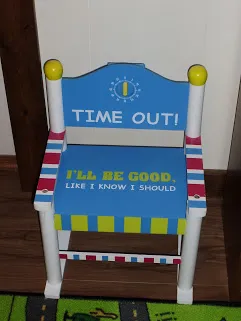
It consists of something as simple as removing the subject (a child in this case) from the situation, isolating them from any positive reinforcer (from my attention, from their toys.). It should be used right after the unwanted behavior.
It's a technique that has increasingly taken on negative connotations. Isolating the child, sitting them on a chair and not letting them get up, etc… Many times what happens, especially with square children, is that the child doesn't want to sit down and a pitched battle begins to get them to. Which ends up making the situation even worse.
For me the great benefit of this technique lies in getting out of the conflict situation. Two siblings fight (in my house this happens a lot) and to ease the tension you send each one to a place in the house (to their room for example) to relax. There's no need to shout or use it as a punishment, it's simply about getting them out of the situation and giving them a space to ease that generated tension.
In adolescence, you can also use it when there's a conflict and you don't see a way to stop it. You're not going to achieve anything in the middle of a fight, neither with a child nor with a teenager. You need to wait for the emotions to calm down. Theirs and yours, and there's nothing better than separating and letting time calm tempers. Afterward you'll be able to talk in a different way.
**Remember: we are also educating in emotional management. If we teach them to step away from a conflict situation in order to calm down instead of continuing the fight and losing their cool, they'll take away a great lesson.**
Conclusions:
- Although punishment doesn't work, we use it because we don't know how to do it any other way.
- Our children make mistakes because they're going through learning processes that require time.
- When they misbehave it's not to annoy us, the reasons are usually something else.
- Obedience is one more learning process, that's why it requires time and perseverance.
- When my child misbehaves, it's often because we're doing it wrong. First of all, we must improve our own actions.
- Adjust expectations to your child's age.
- Some time ago I made a decision: I want more good moments than bad ones in my house. That's why I decided to educate without using punishments and to try not to shout. Every day I make the effort and I don't always succeed. But one thing I can tell you, my children don't behave worse now that I no longer use punishments.
Does this resonate with you?
Our team can help. Write to us and we'll guide you with no obligation.