Can you raise children without relying solely on punishment?

Mireia Navarro Vera
Director and psychologist
COPC 10631
Contents
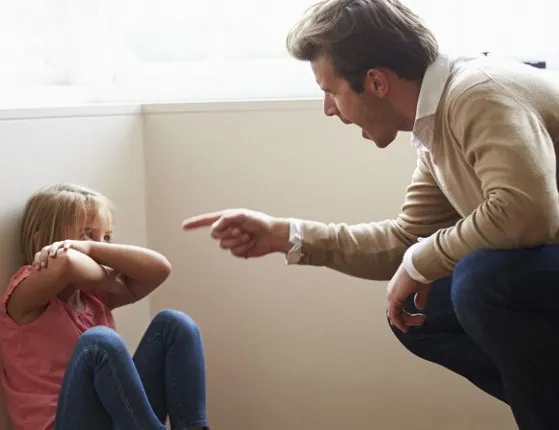
We use punishments far too often: "a week without watching television for misbehaving", "no computer games today for saying a swear word"...shouting , threats are attempts we often use to get our children to listen to us. But punishment used incorrectly loses its effectiveness. To use punishment in an appropriate way, we recommend our post The 10 keys to using punishment well.
What do we really teach when we punish?
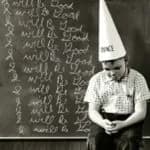
When you punish a child, you are really teaching them that conflicts can be resolved through violence, but they do not learn to be a better person, nor to be more responsible for their actions, nor to solve their problems.
In other words, by punishing, you teach them what they should not do but in no case what they should do.
Why we resort to punishment
Perhaps it is the first technique we think of since, generally, it is the main method that has been used with us.
It really is a strategy that quickly comes to mind for parents, and at the same time it ends the inappropriate behaviour quickly.
Strategies more beneficial than punishment
But there really are other strategies that have more beneficial effects; some of the guidelines would be:
- Highlight the inappropriate behaviour, in this way you are punishing the behaviour and not the child.
- Communicate what the desired conduct is or the behaviour we would have liked them to carry out.
We present an example:
-explain our disagreement ("I think it is wrong that you do not brush your teeth after dinner")
-explain what we expect of them ("I would like you to brush your teeth after every meal")
-explain how they can correct it ("you started playing and got distracted, it would be better if after dinner you went straight to brush your teeth")
-apply positive consequences if they perform the action correctly
Reinforcing good behaviour
At the same time, catch them when they behave well, that is, pay attention to them, reward and praise the child when they behave well, which motivates the child to repeat this behaviour more often.
Offering rewards and small prizes
Offering rewards and small prizes is a very effective strategy. It consists of offering prizes and our attention for the things they do well and that are hard for them.
One possibility would be to choose 1 or 2 behaviours we want to change and choose a reward appropriate to their age if they do them well. For little ones it could be: more time at the park, an extra bedtime story, giving them their favourite lunch or dinner. For older children, on the other hand, it could be going to bed a little later or staying out longer with their friends.
To do this correctly, the child has to know which behaviour we want them to improve and its reward.
It is important to acknowledge every small improvement. It is very difficult to go from bad behaviour to correct behaviour quickly; instead, if we praise every small improvement, the child will be encouraged to continue.
Parents as educational role models
At the same time, we must bear in mind that parents are the main educational role models at home. The adults around children play a primary role and have the main influence on children's behaviour, which is why it is essential that we act the way we want our children to act.
Does this resonate with you?
Our team can help. Write to us and we'll guide you with no obligation.