Boys are blue and girls are pink

Eugenia Olego Gual
Child, adolescent, and adult psychologist
COPC 16511
Contents
Is it true that girls are pink and boys are blue? Or is it simply something that has been constructed over the years? Gender stereotypes are instilled from birth since they are established ideas inherited within our social model, which is why most of the time these details go unnoticed, but in reality we are sustaining a wound that is difficult to heal.
If today we still celebrate Working Women's Day, it is for a reason. Although there have been important advances throughout history, women are still sometimes discriminated against at work, a percentage suffer gender-based violence, sexual abuse and in some cases murder.
It is known that more than 110 million children do not attend school, and two thirds are girls; in addition, female genital mutilation exists among 130 million girls and women around the world. These are countless examples that show how gender inequality affects women in a very serious way.
As we can see, on a global level there is a discrepancy between genders, and that is why it is a great responsibility to educate our own both at home and at school.
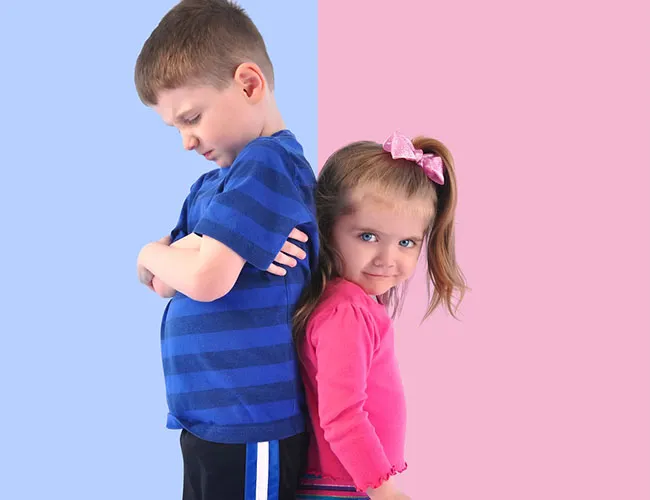
Here we see a clear example of the differences between boys and girls:
Serious consequences of gender stereotypes:
Gender stereotypes, therefore, leave aftereffects that will mark the future of our boys and girls, such as:
- Salary differences in many jobs, especially leadership ones
- Sexist stereotypes are transmitted that maintain psychosocial distress
- Gender-based violence is fostered
- Lack of self-esteem and feelings of inferiority
- They limit the possibilities of expression and social communication
- They favor male chauvinism
How can we reduce gender stereotypes?
The only way to minimize this problem is through EDUCATION, working on it more as a promotion than as a prevention. It is essential to educate our own from the moment they are born that we all have the same rights and that stereotypes are something that has been instilled in us, we were not born with them.
What can we do at home?
- Even though children may have more preferences for some games than others, it is our responsibility to offer them different types of play: Symbolic play (play kitchens, animals, etc.), building blocks, movement games, etc. We must consider that each area is fundamental to their development; moreover, it is they who naturally choose what they like and normalize the toys. That is to say, if a boy has dolls, he will see it as normal and not as "something specific to girls".
- Owning male and female dolls with a poorly defined sex so as not to condition the child; this way they can express any situation, regardless of its image.
- Having both female and male social relationships so that discrimination is not seen.
- Analyzing stereotyped ideas such as: "Don't cry like a girl", "Come on, champ, you're so strong!" or "Poor little thing... she's so sensitive...". Such comments are heard constantly in everyday life as something normalized and cause them to be internalized in the child's thinking.
- Assessing how the parents relate to each other as a couple; what type of roles each of them plays.
- Demonstrating that household chores are not one person's things, but rather are shared. In addition, it is very positive that they are introduced to them from a very young age.
- Teaching them emotional intelligence so that they can learn and manage their emotions. This is not only for girls, but for all genders since emotions are universal.
Does this resonate with you?
Our team can help. Write to us and we'll guide you with no obligation.