8 phrases you should never say to your child

Mireia Navarro Vera
Director and psychologist
COPC 10631
Contents
Being a parent is not easy and every day we learn something new. It is a job in constant training and you will never be good enough to avoid being surprised by something new. Our days lack hours, work, loads of laundry, after-school activities, dinners, baths… many times we lose our temper and in those moments we use phrases that can damage our children's self-esteem. Others, we use them because we have heard them said many times by our own parents.
Here I leave you a compilation of the phrases that will most affect our children:
1. You never do anything right
Your child has just spilled the soup on the floor, even though you had warned them a thousand times, and suddenly, full of rage, you say: always the same, you never do anything right. How do you think your child will feel hearing that phrase?
Not only do you tell them that they do not do things right, you also give them no chance to improve because the words never or always do not invite change or improvement.
The next time your child breaks something or makes a mistake, breathe deeply before speaking and remember that the phrase you say to them will influence their feelings, their self-esteem and the way they face problems in the future.
2. Look how well your brother does it
We must always avoid comparisons, not only between siblings, but also between schoolmates or any other child. When we do this, we are telling them "you will never be as good as him". Another phrase that, far from inviting change, anchors you in bad behavior and demotivation.
3. Don't cry
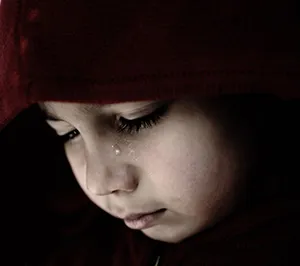
We do not want our children to suffer, so when we see them crying about something the first thing that comes out is: don't cry over that silly thing, it's not such a big deal. When really what we should tell them is: I understand that you are sad about what happened to you. With the first phrase we convey to them: you are foolish for crying about that; with the second phrase we tell them I understand you, I know what you feel and I am by your side.
Negative emotions should not be avoided, they are emotions as important as positive ones and they need to be lived and understood. The best thing we can do for our children is to accept them; they have to cry, be sad and feel frustrated.
What is important to them must be important to you, however insignificant it may be. If your child cries because they have argued with their best friend, and even though you know that tomorrow they will be friends again, you must not tell them that it is a silly thing; you must give it the importance that it has for them.
4. Don't be afraid over that silly thing
Fear is something that accompanies us throughout our life and it is very important that it does so, because thanks to fear we can avoid high-risk behaviors. When we are little the fears are more unreal (the wolf, monsters,..) and as we grow up the fears become more real (of thieves, of natural disasters,…).
When our child confesses that they are afraid of the dark or of the wolf, what we cannot do is tell them that they should not be afraid, that it is a silly thing or that wolves do not exist. That way we do not help them. On the contrary, we must give it the importance it has and look for a solution together.
We could tell them something like this: I remember that when I was little I was also afraid of the dark and I always wanted to leave a light on. Do you think that if I leave the hallway light on you will feel calmer? We can also buy a flashlight so that you can turn it on if you need it during the night.
5. Are you stupid or what
Phrases of this kind, in which you hang a negative label on children, are a real burden on self-esteem. Telling a child that they are ugly, or stupid or fat or any disparaging adjective is like hanging a chain with a great weight around their neck. If I am something, it means that I am not going to change; it is very different to tell someone: "you are bad" than to tell them" you behaved badly". The first phrase tells you that you are like that and that there is no remedy; the second phrase only says that you have done something wrong, but you can also do it better.
6. I don't love you anymore
Your young child has gotten very angry with you and tells you "I don't love you anymore" and your response comes out of your pain, your frustration and your anger and you tell them "neither do I". Feelings should not be subject to emotions; they are something more lasting and stable. It would be much better to say: "well, I do love you even though right now I am very angry with you".
We are the ones in charge of educating our children and within this education we must also teach them to differentiate emotion from feeling. We must not tell them that we no longer love them when really what is happening is that we have gotten angry.
7. You always embarrass me
When your child waits to be surrounded by people to demand attention in a bad way, it is easy for you to lose your temper and use phrases like "you embarrassed me in front of your aunts and uncles". This type of phrase will not make them stop behaving like that; on the contrary, it will have exactly the opposite effect. Maybe they need more attention and you must give it to them before they start to misbehave. Look for a solution but do not tell them that you are ashamed of them because that phrase is certainly not the solution.
8. I wish you had never been born
This phrase can only have one purpose and that is to hurt. It does not seek change nor does it seek to educate; it is the result of a state of nervousness and frustration that makes you say something that is probably not true. Our children need to know that we love them despite the mistakes they make.
Does this resonate with you?
Our team can help. Write to us and we'll guide you with no obligation.