What is post-vacation syndrome?

Mireia Navarro Vera
Director and psychologist
COPC 10631
Contents
Are you one of those who have already finished their holidays and are going back to work today? You will surely feel more tired than usual and far less productive. After a holiday period, it is very common for the so-called post-vacation syndrome to appear. It is estimated that almost 30% of the population suffers from it (according to Adecco) and it can affect both children and adults.
It is very normal to feel this way and you should not worry, it will pass in one or two weeks. We all need a period of adaptation when returning to the routine, although it will affect some more than others.
What is post-vacation syndrome?
It is a condition that appears after a holiday period, especially when this period is long. It is characterized by a group of symptoms that will affect you to a greater or lesser extent and that usually last from 2 or 3 days up to two weeks.
These symptoms are:
- Physical fatigue
- Headache
- Digestive problems
- Irritability. Everything bothers you and you snap at the slightest thing
- Apathy. You do not feel like doing anything
- Drowsiness. It can affect sleep, you may have insomnia, difficulty falling asleep, but above all a feeling of drowsiness during the day
- Lack of concentration. It is extremely hard to perform at work because our ability to concentrate is very low.
- Emotional lability. Frequent mood swings, and for no apparent reason
- Sadness. A mild feeling of sadness that something good has come to an end.
- General lack of energy. It is as if your batteries had run out and everything feels overwhelming.
Not all symptoms always appear, nor with the same intensity. The four most frequent are: fatigue, apathy, lack of concentration and drowsiness. Anxiety can also appear, although it is less frequent.

Although it is not a syndrome classified in the DSM-V, we could place it within the section “Other specified depressive disorder” 311 (F32.8) as a short-duration depressive episode.
It is not serious and does not usually require treatment, neither psychological nor pharmacological, beyond the odd ibuprofen ;)
Only if it persists beyond two weeks and the intensity of the symptoms is so high that it affects your personal and working life should you see a professional.
How can we overcome it?
We can prevent it:
- Try not to bunch all your holidays into a single long period each year (although this is not always possible and will depend on the sector you work in). It is less likely that you will suffer from this syndrome during short holiday periods (10-15 days).
- Come back from your holiday destination a couple of days before starting work. To begin adapting to the environment, to the heat, to your home… Putting the laundry on and having clean clothes for the first day of work also helps.
- Start your sleep routines a couple of days beforehand. Do not leave the early rise for the first day. That way you get your body used to the new schedule.
But sometimes we cannot prevent it and all we can do is overcome it:
- Set yourself realistic goals. Do not expect to perform at your best from the first day, it is impossible. Your capacity for attention and concentration is not the same as when you left. Do not try to work as hard as the best of them, take things calmly. If you set yourself unrealistic goals, frustration is guaranteed. You cannot work at the same pace you had before going on holiday, you need a few days to adapt. You have to return to the routine little by little.
- Work less. For the first few days work fewer hours and if you can start mid-week so that the weekend is close at hand. It would be like the adaptation period that children go through at nursery: the first day a couple of hours, the second four, and so on….
- Enjoy some leisure time. Go out for a drink after work or for dinner, or both. Do not suddenly stop doing those little things you did on holiday. Try to keep something of the summer alive (the outdoor terraces, having a drink with friends, etc…)
- Try to sleep enough hours. Regulating your sleep is important in order to fight the tiredness we feel. We must try to return to a more normalized sleep schedule, we are coming from a period in which we go to bed late and get up late, and this needs to be set back on track.
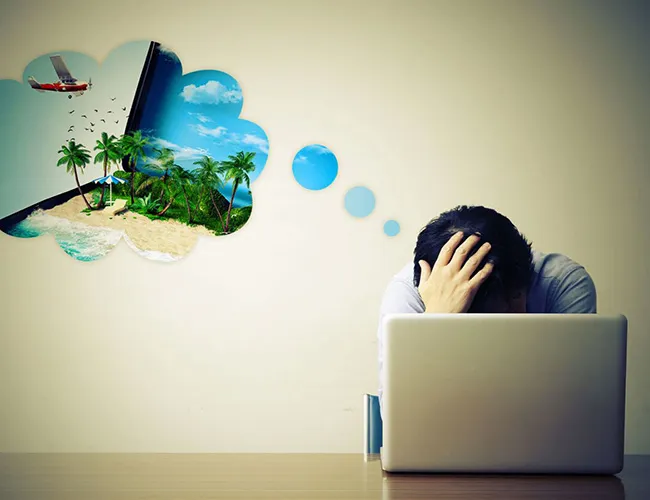
- Work on your mind. Do not allow your thoughts to keep going round and round about the end of the holidays: how nice it was there, right now I would be having my little beer, right now at the beach… The sooner you willingly accept the new situation, the better. We must not idealize the holidays, surely there were also moments that were not so good. We cannot let our mind fool us into thinking that you can only feel good on holiday, because that is not true.
- Work on your body. Regular practice of sport will help you. Although you may think, as tired as I am, am I going to exercise on top of that? The tiredness experienced in post-vacation syndrome has a part that is physical, obviously, but it also has another part that is psychological, and this one is not fought with rest and inactivity, it is fought with light or moderate physical exercise.
- It is the time to set goals for the year. I love September because it opens up a new year for me, I like to plan what I will do. It is the best time to sign up for English classes or the gym, or to do that thing you left pending before the holidays. Having new goals fills me with enthusiasm; looking ahead and not at what has already ended changes your course and your mood.
Mireia Navarro explains more details about post-vacation syndrome
Do not forget about your children

Children can also have this syndrome or some of its symptoms. Be patient if they are more irritable (this is their way of expressing their sadness) or do not feel like doing anything** not even getting dressed. They too need a period of adaptation to the change. Although they have not started school yet, their holidays in a way also come to an end when you start working, do not forget that.
Does this resonate with you?
Our team can help. Write to us and we'll guide you with no obligation.