Am I an HSP? An approach to high sensitivity

Sara Amada Feferman
Child, adolescent, and adult psychologist
COPC 17647
Contents
Are you someone who overthinks things? Do you take comments or events to heart that don't affect others? Do you cry often? Are you deeply bothered by certain fabrics, smells, noises? Do you feel moved by art, nature…? Perhaps you are a highly sensitive person.
According to Elaine Aron, the psychologist and researcher who first explored and wrote about this subject in depth, high sensitivity is a personality trait that affects approximately 20% - 30% of the population in equal proportions of men and women. It is a trait you are born with and that is mostly hereditary. Highly sensitive people (known by the acronym HSP) are born and live their whole lives with it, so we would not be talking about any syndrome or pathology. We could say it is a way of being.
Characteristics of a highly sensitive person
The fact that we meet some of the characteristics we mentioned earlier does not mean we are HSP. For Aron, the highly sensitive person must necessarily meet the following characteristics:
- Depth of processing
- High degree of empathy
- Sensitivity to details and sensory stimuli
- Overstimulation or saturation
The nervous system of these people processes information in a much faster and deeper way, so they receive a greater amount of stimuli, whether necessary or not, in an involuntary manner. This leads them to reflect deeply on everything that happens to them, that they feel and perceive, and it can become truly exhausting for them. In the same way, they need this information to feel safe in a new environment. They are great observers who find new situations and relationships difficult. Sometimes it is confused with shyness, and although most are introverted people, 30% of HSPs are extroverted. In other cases it has even been confused with some mild disorders within the autism spectrum (especially in early childhood) and with social phobia (in adolescents and adults). Nothing could be further from the truth. The fact that highly sensitive people feel more comfortable in familiar environments, with few people and with a low level of stimuli, is to restrict that torrent of sensory and emotional information they receive and which exhausts them. Sometimes they need to isolate themselves to regulate their nervous system.
What are highly sensitive people or HSPs like?
Having a greater awareness of their emotions, they feel them very intensely. They also feel and notice the emotions of others and can easily put themselves in their place. They have great empathy (it has been shown that there is greater activity of mirror neurons). This can lead them to put the needs of others ahead of their own and to become enormously frustrated when these are not reciprocated.
As their neurotransmitters receive a greater amount of sensory stimuli that they send as information to the brain, they notice details that go unnoticed by everyone else, even though their sensory organs are morphologically the same as everyone else's. The change of a friend's perfume, distinguishing which wine is being drunk by its taste, knowing who has been in a room without having seen them by the smell, are common situations when we are with an HSP.
The same happens with intuition. They can know a person's emotional state without that person needing to explain it to them. It is not magic. It is due to the amount of detail previously stored by their brain about the person in question (gestures, intonation of phrases, etc.).
This level of detail also carries over into their personal way of functioning. They are tremendously meticulous, self-demanding and perfectionist, as they have a greater capacity to see the error or what can be improved. This makes them highly valued people, especially in the work environment. In this regard, although they can carry out any type of activity, they tend to gravitate toward sectors related to creativity (writers, actors, musicians…) and to helping others (doctors, nurses, therapists…).
They have a high regard for justice and are deeply affected by situations they consider unjust. It is easy for them to get involved in NGOs or in volunteer work.
As we saw earlier, this high flow of reception and deep processing of information leads them to situations of physical and mental exhaustion. To find their balance again and regulate themselves they need to isolate themselves. This fact can make them more susceptible to suffering stress and anxiety, they may even come to somatize or develop autoimmune diseases, if they are not aware of this need for self-regulation. It is very important that they know what signals their body sends them in certain situations so that they can recognize them and act before the consequences become greater.
High sensitivity in childhood
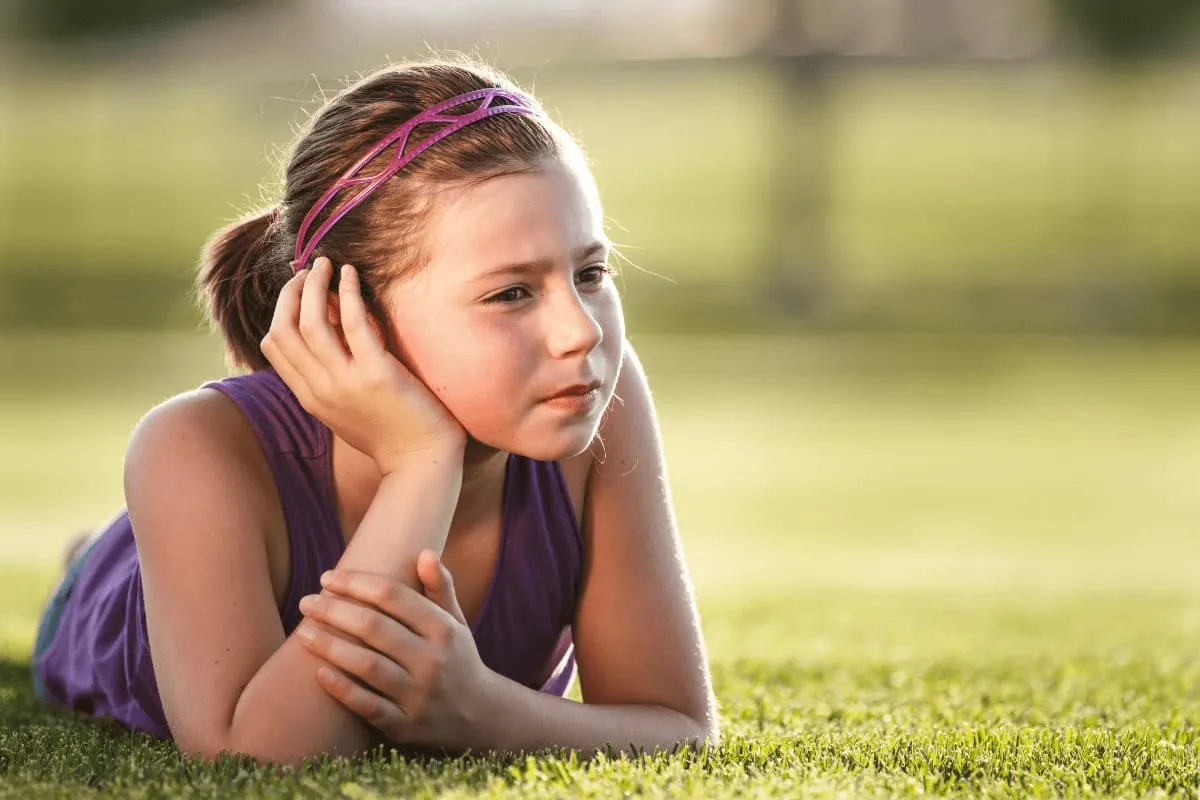
As we mentioned at the beginning of this article, high sensitivity is a personality trait you are born with. Identifying this trait from childhood is vital in order to be able to approach the upbringing and education of these children from a perspective suited to their needs and to achieve a more satisfying, stable and healthy childhood, adolescence and adult life. Highly sensitive children will be HSP adults. In fact, a large part of the mental health problems in highly sensitive adults are due to childhoods marked by misunderstanding because of their environment's lack of awareness regarding their condition. Let's see what highly sensitive children (HSC) are like.
In addition to meeting the four basic characteristics we have mentioned, highly sensitive children are children with a great inner world, a great curiosity about their environment from early childhood, great observers, who ask questions and reflect in a much more mature way than children their age. They also use a more elaborate vocabulary. They use and understand irony and double meanings. In the face of new situations they may appear reluctant, still, quiet and observant, they suffer in the face of injustice and they notice changes in their mood and in that of others. They also notice changes in the environment, however small they may be. In situations of much environmental stimulation they become irritable and very nervous. This indicates to us that they are reaching their saturation limit. It is important to notice this moment in order to be able to act and reduce stimuli or teach the child to do so at a given moment and not provoke greater situations such as tantrums, for example. Sought-out solitude is a good way to recover balance.
I'm an HSP, now what?
Being a minority personality trait (20-30% of the population) and one that has been known for a relatively short time (Aron begins to speak of Highly Sensitive People around the 1990s and does not begin her studies until years later), we do not have validated diagnostic tests in our country. However, we do have two self-assessment tests that, although not validated, can put us on the right track. One is by Elaine N. Aron which we can find in her book "El Don de la Sensibilidad" and the other is the assessment test from the Association of Professionals in High Sensitivity (APAS). In the latter we also find a test for children. Currently there are also professionals in our country specialized in high sensitivity who can help us identify and manage this personality trait.
The news is usually received in a positive way. It is a relief to know that this intense way of being has an explanation, that they are not the only ones and, even more importantly, that they can be helped by specialists to manage it, accept it and live it in a more understanding and full way.
As Aron describes it in her book, high sensitivity is a gift. It is true that it can cause suffering if we do not know how to manage it, but well understood, worked on, adapted and channeled, it leads us to live life feeling it in all its fullness. With bad moments, it is true, but feeling the good ones with the same intensity too. In a way that most are not able to feel.
Notes
- Elain Aron, El don de la sensibilidad, 2006, Ediciones Obelisco.
- Anna Romeu, Sóc sensible. Aprendre a conviure amb l’alta sensibilitat, 2022, Rosa dels
vents
- Harper, W. (Director). (2015). SENSIBLE. La historia no contada, 2015. [Documentary]. 63
min
HSP research web pages:
Test:
Does this resonate with you?
Our team can help. Write to us and we'll guide you with no obligation.