Strategies to help our children be more patient

Eugenia Olego Gual
Child, adolescent, and adult psychologist
COPC 16511
Contents
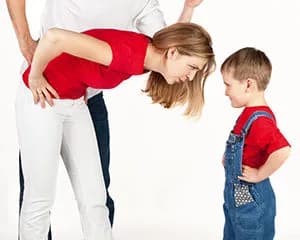
"Patience is bitter, but it bears sweet fruit (Afghan proverb)"After a working day, we want to get home and enjoy our children, right? But what do we find? Homework, extracurricular activities, baths, dinner, etc. We have so many accumulated obligations that our patience shrinks every time they don't behave, and that makes us lose our temper very easily. And the worst part of all is that we pass it on to them.
What patience is and why it matters
Patience is the ability to endure something without getting upset (as the DRAE expresses it), a treasure that many parents would wish to possess. Patience is an important value that can help us navigate life and face different situations successfully. One of the reasons for consultation we receive is how to gain more patience so that parents can better manage conflict situations and enjoy their children more. And, what's more, how to teach the children to be more patient.
How children experience time
First of all, we parents must remember that our children are little, they are not adults, and this means that they are not in a hurry to do things, their sense of time is different from ours, they are curious and touch everything, they want to play constantly, they need much more attention than us, they don't need to do many things, simply to do them at their own pace and with our attention.
Strategies to teach children to be more patient
Below, we will offer some strategies to teach them to be more patient:
- Set an example. Let's remember that children are expert imitators of us, so if we transmit our serenity to them, we will help them be serene too. On the other hand, if we lose our patience, it is advisable to apologize, since we are also human.
- Introduce small waits. From a young age, we must teach them that they have to wait. For example, when giving them dessert, queuing at the supermarket, waiting to open their birthday presents, etc.
- Use metaphor. Since children love animals, we can show them some that, in order to survive, must have this skill highly developed. For example, the spider needs a lot of patience to weave a web, ants carry food into the anthill thanks to working as a team and in a very orderly way; or the tiger, to hunt its prey, must approach stealthily and slowly. If they didn't do it this way, these animals would die of hunger.
- Talk and reason with the child about decisions, and explain to them when and why we must wait in certain situations, for example, when we go to the doctor. If the wait is very long, it is advisable to bring games, books or coloring drawings that they can use to entertain themselves.
- Keep our promises. If we have promised them that we would play playmobil with them after dinner or that we would do a puzzle after homework, we must keep our word.
- Teach them not to interrupt a conversation. It is important that they learn to wait when other people are talking. If they insist, they should be ignored (at least 2 minutes) so that they learn that they cannot be attended to whenever they want, and thus we increase their waiting time.
- Explain why we have to wait. Through everyday examples we can teach them that when you have patience things turn out better. For example, we can show them that when we make a sandwich calmly it turns out more elaborate than when in a hurry.
- Put them in charge of a plant. A good exercise is to plant a plant and show them that its growth has its own process and that it is necessary to wait. You can go together to water the plant to observe its evolution. With this we will help them cultivate their patience.
- Do activities or games that foster patience, such as puzzles, riddles, cooking, etc.
- Use stories, tales or films that talk about this skill. We provide a link where you can find some stories to work on patience: https://cuentosparadormir.com/valores/cuentos-de-paciencia
Does this resonate with you?
Our team can help. Write to us and we'll guide you with no obligation.