
About self-care

Mireia Navarro Vera
Director and psychologist
COPC 10631
What is self-care?
Running on autopilot can be very useful for meeting our short-term goals, our daily routine, completely ignoring the demands of our deepest "self".
But when our body and mind decide that it is enough, that we have to stop, that is when we face a kind of management that involves more reasoning, self-knowledge, and in which our thoughts and emotions come into play.
“Just as the ocean has waves on its surface and silent depths beneath, we too can know the patterns of thought on the surface, as well as the calmer depths within us”
(Roberta Lewis)
Self-care requires time and consistency. It is about achieving a lifestyle in which we attain a state of calm and well-being that, socially, we increasingly desire more and more.
Let us not overlook that we function as a multidisciplinary system, which is why it is necessary to observe ourselves as a whole made up of body and mind, in which any change in one of the systems can affect the other.
How to work on self-care?
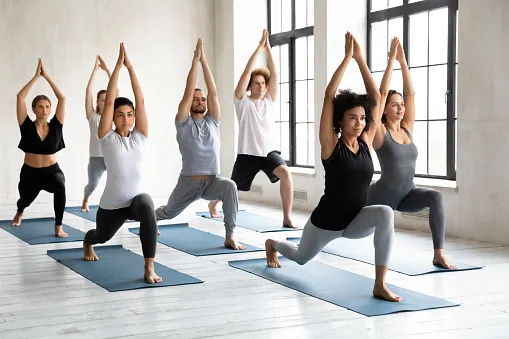
- Physical activity. Maintaining an active life brings us both physical and psychological benefits. When we exercise, we release hormones such as endorphins and dopamine, which facilitate an improvement in subjective health, mood, well-being, and higher-quality rest. (Arruza, Arribas, Gil de Montes, Irazusta, Romero y Cecchini, 2008).
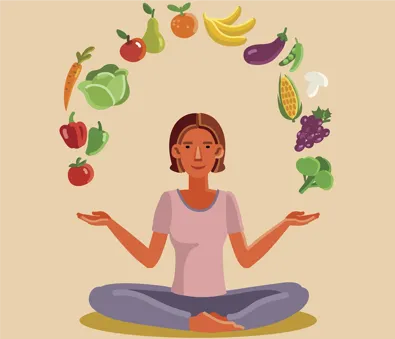
- Good nutrition. Choosing seasonal and healthy foods allows us to feel greater satiety and to avoid discomfort, as digestion becomes lighter. Taking care of ourselves on the inside also includes making small changes in our diet to provide our body with the essential nutrients for the proper functioning of our systems. This practice is completely the opposite of the classic restrictive diets, in which, in most cases, rates of anxiety and overeating occur. Making the small gesture of listening to our mind instead of our stomach when we believe we feel the need to consume certain foods can help us to identify as well as to manage our emotions in the moments when we need it most.
The practice of mindful eating is designed to do conscious work on our nutrition, guided by our own internal experiences moment to moment. As Dr. Jan Chozen Bays, pediatrician and author of Comer atentos (Mindful Eating): Guía para redescubrir una relación sana con los alimentos, explains, eating mindfully is a unique experience based on learning, in which self-criticism is replaced by self-care, anxiety by curiosity, and guilt by respect for our inner wisdom. Some questions it leads us to consider are: Am I hungry? Where do I feel the hunger? What is it that I really crave? What am I tasting right now? Chozen
- Adequate sleep hygiene. Just as in the morning we devote time to getting ready to start the day and go out, it is worthwhile to think about a small nighttime ritual to go to sleep. Avoiding the use of electronic devices before going to bed, taking a lukewarm shower, listening to relaxing music or a meditation, using warm lights, reducing caffeine or theine intake, and practicing some kind of physical activity can contribute to achieving better rest.
- Practice meditation. This is an increasingly widespread activity that brings numerous benefits, such as achieving a reduction in anxiety, in heart rate, decreasing the production of stress hormones, and allowing us to achieve a state of calm for our day-to-day life. Meditating is not about disconnecting and escaping from everything around us, but about reconnecting with our deepest self. The aim of the practice is to achieve a state of awareness centered on the present, in which we can decide how much attention we give to our thoughts, which are usually based on past events or anticipating the future. (Chopra, 2013) It is worthwhile to find a moment in the day dedicated to the practice of meditation; it can be 10 minutes and then gradually increasing the time. There are numerous videos on YouTube of guided meditations and various apps to guide you in the beginnings of this wonderful activity.
- Devote time to yourself. Looking at the clock and putting other people ahead of ourselves is a very common situation in our lives. The phrase “the caregiver must be cared for in order to be able to care” perfectly describes the message of this piece of advice. We need to devote moments to ourselves, to give ourselves small pleasures, to simply allow ourselves to do what we feel like doing. Reading a book, taking a walk, getting a massage, eating something special, or simply relaxing and meditating for a few minutes are small actions that can make us feel good and rewarded.
- Seek a professional if you need to. It is important to be honest with ourselves and to be aware of when we cannot cope with our personal resources in the face of certain situations that cause us distress. In those moments, remember that you can turn to a qualified professional to accompany you on the path and help you make small changes in your personal life that will make it easier to live with greater fullness and well-being.
Self-care as a way of validating ourselves
Self-care is about validating ourselves as people who are important to us. And only we ourselves can take care of our body and mind so that both can respond to our demands and requests, and to those that the environment exposes us to.

Does this resonate with you?
Our team can help. Write to us and we'll guide you with no obligation.