Psychonutrition Post

Mireia Navarro Vera
Director and psychologist
COPC 10631
Contents
We are in a situation in which eating without hunger to soothe feelings, symptoms or simply out of boredom happens more often than it should.
“you eat just to eat” “I eat without being hungry” “I need chocolate”
The two types of hunger
Physiological hunger
It is important to know that we can detect two types of hunger, which may occur at some point in our lives. Physiological hunger is the one in which, when your reserves are reaching low levels, the body sends a signal to the brain to let us know that we need energy and nutrients in order to keep functioning. This type of hunger can be identified by physical sensations in the stomach, because it appears gradually and, above all, because it satisfies us and makes us feel good.
From the point of view of nutrition and healthy eating, it is the perfect type of hunger because it would help us avoid many diet-related diseases, such as, for example, being overweight. Unfortunately it is not the only one we must consider; contrary to the physiological one there is the emotional one.
Emotional hunger
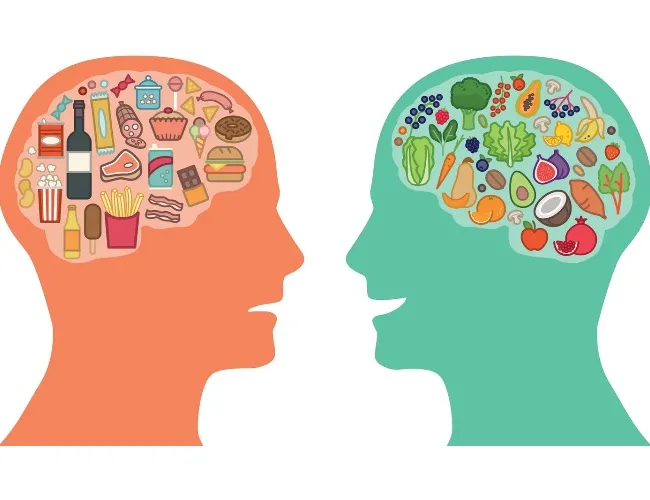
Emotional hunger appears in those moments in which, without needing it, we resort to food in a sudden and urgent way. It arises when we have feelings of emptiness or anxiety and we use it as a tool to cover those emotions that cause us discomfort. Not all kinds of foods such as fruits or vegetables work for us; rather, it is characterized by desiring or believing we need “craving foods” such as foods high in fats, sugars and salt, for example, chocolates, sweets or salty snacks. The most important thing in order to identify when we are suffering from unnecessary and unhealthy hunger is to recognize what sensation we get after eating, as well as what thoughts lead us to do it; when “I need…” crosses our mind, PAY ATTENTION! Emotional hunger, unlike physiological hunger, does not produce satisfaction or fullness and, above all, does not make us feel good.
Emotional management of eating
It is important to recognize and accept all our emotions; they are all valid and we must allow ourselves to feel them and identify what their origin may be in order to work on them in depth. We must not forget that food exists to nourish us and give us the necessary energy when our body needs it, but it is not the secret potion to relieve or eliminate emotions that cause us discomfort or that we simply do not want to feel.

When, on a regular basis, we can detect some of these symptoms and we do not know how to manage it in a healthy and satisfactory way, it is advisable to see a professional to help us along the path of our emotional and eating management.
Solutions for emotional hunger
Some solutions for this type of eating may be:
- Avoid buying sugars, unhealthy fats and salty foods and buy more real foods such as fruits, vegetables and nuts so we have more healthy food available than unhealthy food whenever our body tells us that we “need” something.
- Design a daily menu planning five meals a day.
- It is an opportunity to start with the thought-stopping technique and to become aware of our emotions.
- Start an exercise routine, especially for these days when we must stay at home and temptation and boredom can easily trap us.
Does this resonate with you?
Our team can help. Write to us and we'll guide you with no obligation.