
How to Overcome a Divorce

Mireia Navarro Vera
Director and psychologist
COPC 10631
Contents
It is clear that a divorce does not end when we separate, nor does it begin the day we decide on it. It begins much earlier and ends much later.
Divorce rates are increasingly higher and the fact is that relationships are not usually for life, at least not all of them. Sometimes we evolve along different paths, other times we neglect the relationship so much that it ends up dying, and others it simply stops working.
In couples therapy I always say that separation is not a failure of the therapy; the only failure of couples therapy is that at the end of the treatment they remain together in a relationship that does not make them happy. That is the real failure. Staying in a relationship that does not add anything to me, just because I am afraid to leave.
And the fact is that stepping out of our comfort zone is very difficult for us and we prefer to stay in our routines, even if it has been a while since we stopped liking them. By this I do not mean that I encourage everyone to separate, but I do encourage you to understand that a relationship is something that is alive, that flows, that must be fed and cared for and whose rhythm must be respected. A relationship can begin and can also end, because everything is in constant change, and if this happens to us, we must accept it and not cling to something that does not work just because there was a time when it did work.
Here I leave you a video of mine on our YouTube channel where I deal in more depth with how to overcome a divorce.
Why do we separate?
Even at the risk of generalizing a lot, we could say that there are two reasons why a separation occurs:
- The couple loves each other, there is still passion, but the conflict is very high. These are relationships that do not bring me anything, that do not add to me, that make me suffer and feel bad, but I feel love. Getting out of these relationships is not easy because there are still feelings left. Two things can happen: that the level of conflict is so high that the separation is quick, or that it is not so high and therefore they continue to have sexual encounters for a long time after the separation.
- The love fades. The problem is that this does not happen overnight; there is a lot of confusion, a lot of fear of realizing that I really do love them when it is already too late. Normally your body warns you of this, you start not wanting to have sex, feeling anxiety, or desiring other people. Although you still love your partner because it remains like a family love, something big, but it is not what you should feel for your partner. It is very hard to get out of these relationships, especially if they are healthy, with very few conflicts…because we could spend years in a comfortable relationship, even though there was no longer any love, and because there is a fear of regret. You have to be very brave to leave a relationship like that because doubts always assail you.
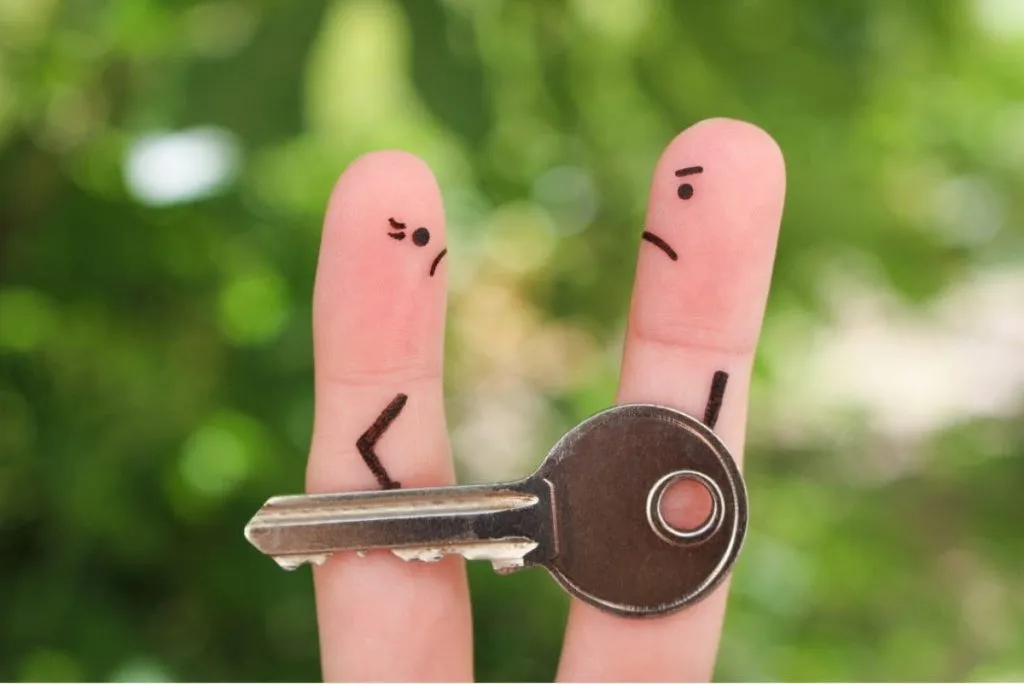
When this decision is made, a crisis begins. And both the one who leaves and the one who is left suffer.
The person who receives the news believes that the other is rushing, because the information falls on them overnight. But the truth is that they usually have been mulling it over for a long time but have not been able to say it.
We feel great pain when we become aware that a relationship is ending. It is a great loss. We lose love, but we also lose a part of ourselves. Our roles change drastically, we go from being the mother of or father of and the husband of, to being ourselves almost 100%, and then we notice a great emptiness and vertigo, the vertigo that one feels when we know we have to throw ourselves off a mountain in free fall and we are the ones who have to take the leap.
PHASES OF A SEPARATION
Separation, as a loss, goes through phases very similar to those of any grieving process:
- Denial: This cannot be happening to us. We have to keep trying. It cannot all end like this. So many years, so many memories, and all for nothing. It is a short phase because reality is like a bucket of cold water that makes us snap out of it.
- Anger: The one who is left directs the anger toward the other person, and the one who leaves directs it toward themselves in the form of guilt. It is an intense phase. We also direct the anger toward the world, when we see other couples, or toward love itself as if it were a fiasco.
- Bargaining: It is the phase in which we begin to negotiate the surrender. We integrate that the relationship is ending and we approach the other person in a different way. We can even make peace with love.
- Sadness: This phase is very important and it must always be gone through in every grieving process. Losses must be cried over in order to be processed.
- Acceptance: Many times sadness and acceptance come hand in hand. Because upon becoming aware that the breakup is real and has come to stay, it is inevitable to feel sadness. Although after this phase a lot of time may pass before being ready for a new relationship.
To overcome a separation, must I go through all the phases?
You do not always go through all of them, nor in the same order, and besides, there are times when they overlap with one another. But as a general rule, to overcome a divorce or separation I am going to need between 6 months and a year. During this period of time, I will feel unstable, as if on a Ferris wheel of emotions; I will have days when I will take on the world and days when the world will take me on. And although being on a Ferris wheel makes you dizzy, it is normal.
Perhaps the most important phase of a separation is that of sadness and acceptance. The moment I accept that this is a very new situation and that I must no longer cling to what I had, and I also allow myself to cry over it, the end of the instability draws near.
To help me get through this process more quickly or better, I must begin to take care of myself and my self-esteem, doing what defines me and makes me happy. Reconnecting with the friends and hobbies that I had perhaps set aside. And above all, distancing myself from everything that means remembering my ex-partner (at least at first). Their environment, their family, and trying to reduce contact. If we have children, we must take great care of the new relationship we are going to establish, knowing how to maintain communication for their sake and cordiality.
That is why it is so important to love from detachment, because I understand that even though I feel great sorrow, I do not need anything outside of myself to achieve my well-being.
A breakup, whether I have chosen it or not, is going to teach me to overcome my limitations and my emotional attachments. Although I am also going to feel sorrow and pain, this is an inevitable part of the process.
LOVE AFTER HEARTBREAK
After some time, we will feel the need to love again. Although there are people who throw themselves into new relationships right away to numb the pain they feel, there are others who need a time of rest.
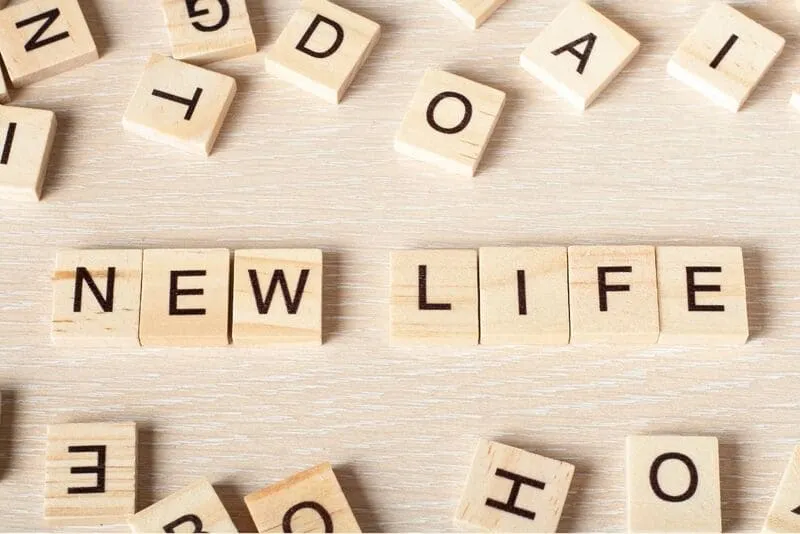
Of course, the best thing is to first work through all the phases of grief and then start another relationship. But as we already know, many times it does not happen that way and we chain relationships together still loaded with baggage.
Be that as it may, the experience of pain stays marked on us. That is why normally when we begin another relationship we feel afraid of suffering again and we go in closed off and distrustful.
Many times we are not even aware of this, but the fear seeps through. And where there is fear there can be no love. Which makes the step into a new relationship much more difficult.
Sometimes we sabotage them unconsciously or we end them even before they begin. Other times fear takes the reins, closing our heart and leaving only the ego, which becomes possessive and I want everything and now. Not to mention that we have just arrived in someone's life, a life that was already full of things and where we still have to fit in.
The beginning of a new relationship is usually insecure, there are comings and goings, approaches and withdrawals. It is normal. That is why, if we go in still full of fear, we are going to handle this new situation very badly.
Does this resonate with you?
Our team can help. Write to us and we'll guide you with no obligation.