How to detect if our child has anorexia?

Eugenia Olego Gual
Child, adolescent, and adult psychologist
COPC 16511
Contents
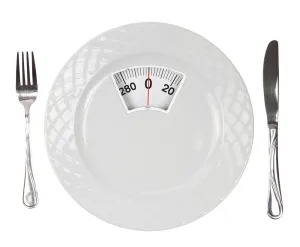
Anorexia Nervosa is classified within the Eating Disorders (ED) in the DSM-V. EDs are mental disorders characterized by an excessive and obsessive fear of gaining weight, both in the present and in the future, where the need to lose weight becomes the basis of all decisions (feeling good is conditioned by what they have eaten or stopped eating, by what the scale reads, by clothing size, etc.).
This obsession gives rise to cognitive distortions regarding the perception of the body and of food. They affect the individual's life in all its spheres (behavioral, emotional and experiential).
Anorexia is a mental disorder that consists of a voluntary loss of weight driven by an obsessive desire to lose weight. This loss is achieved through: reducing food intake, excessive physical exercise, the use of medications (laxatives or diuretics) and self-induced vomiting.
If anorexia begins in the early stages of adolescence, there is a delay in growth (instead of weight loss) and/or the onset of menstruation may be delayed (in the case of women).
Epidemiology:
In Spain, the latest studies conducted agree in indicating a prevalence rate of ED cases in the adolescent population of around 4.75%; specifically, there is a 0.4% rate of anorexia cases in this population.
The age of onset normally develops in puberty-adolescence, although in some cases it may appear at 40 years of age or in childhood.
They affect women much more than men (6 women for every man).
Prognosis:
In 50% of cases there is a complete recovery, in 30% recovery is partial (the course is chronic), and in 20% there are residual problems (digestive problems, inability to have children,..). Finally, there are cases of early mortality (5-10%), mainly due to cardiac complications and suicide.
Factors to take into account:
Below we will show factors that are reflected in the disorder:
Psychological factors:
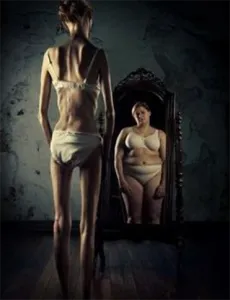
- There is a distortion of body image. That is, even though the patient is extremely thin, they will continue to see themselves as fat.
- Low self-esteem
- Unrealistic thoughts. For example, some are catastrophizers because they think that if they gain 100 grams, everyone will notice.
- Perfectionism
- Rigidity
- Self-demand
- Meticulousness
- Alexithymia: The patient's inability to become aware of their feelings, emotions; that is, of what is happening in general.
- Emotional instability
- Obsessions and rituals. They may perform rituals of doing 200 sit-ups a day.
- Symptoms of anxiety and depression
- Low awareness of the illness. They are not aware that they are facing a problem.
Behavioral factors:
- Reduction in the amounts of food
- Restriction of intake: lying, making excuses, throwing food away, cutting it into pieces, drying oil with a paper, hiding and manipulating food. Some, after eating, go to the bathroom.
- Aggressiveness and hostility regarding meals.
- Avoiding family and social meals
- Trying to control how food is cooked
- Frequent comments about food and the body: checking the calories of foods, the way they are cooked, watching other people's plates, feeling full and fat, asking if they have gained weight,..
- Physical hyperactivity. They need to be in constant activity (watching movies, not taking a nap, doing a lot of sport, doing excessive academic and/or work activities,…)
- They sleep little and their capacity to concentrate decreases
- Weight loss
- Obsession with the scale
Social factors:
- Social Isolation. They avoid social relationships since these are conditioned by how they see themselves physically and by comparisons with others.
- Family conflict
- Hypersensitivity to criticism
- Dependence on others. A need to be valued positively.
- Egocentrism. The patient becomes increasingly egocentric as they are consumed by their fears, obsessions and rituals.
Clinical factors:
- Weight loss or no weight gain
- There may be vomiting.
- Decrease in thyroid hormone
- Lanugo. Hair loss
- Alopecia
- Dry skin
- Constipation
- Anemia
- Rise in cholesterol. When there is a notable loss of weight, cholesterol increases
- Amenorrhea. Absence of menstruation
How to suspect that we are facing anorexia:
The essential thing is that parents go to a professional if they have the suspicion that their child is STARTING and MEETING some of the characteristics mentioned above. Below we will give some clues to help parents detect the possible disorder:
- Stopping eating because of an irrational fear of gaining weight and this being their main objective, therefore this can affect the adolescent's quality of life. In any case, it is normal for an adolescent to want to control their weight always within their limits of normality; but the moment the weight they desire is lower than normal and this keeps increasing, here we are talking about a problem.
- If they start weight-loss diets without need and in an obsessive way. It is very typical for them to begin to want to "be experts" in calories, the type of ingredients that food has,…
- There may be amenorrhea (absence of menstruation for a period longer than 3 months).
- Excess of physical exercise with the aim of losing weight.
- Avoiding family or social meals. Or she herself wants to cook in order to control the amount of food on her plate.
- They become irritable with anything, especially in relation to food. If parents tell them they are worried, they do not recognize this as a problem.
- They stop meeting up with their friends. Bear in mind that good friends may tell them that he/she has a problem, and this is something they do not want to accept.
How families should act in the face of the problem:
This disorder is not easy to deal with, especially for the people around them. For this reason we want to provide a guide to help parents with what to do in the face of possible anorexia:
- Talk to them about your concern regarding their BEHAVIOR towards food. Express your FEELINGS to him/her, not about their weight or what they eat. Share with the adolescent that you are worried about the behavior they are having. Explain to them that these behaviors must indicate that there may be a problem and that the help of a professional is needed.
- Expect resistance. Bear in mind that it is hard for him/her to accept that they are facing a disorder. In addition, achieving their objective has cost them a great deal.
- Stay firm. We are fighting against the tide, but we must be resilient in the face of it.
- Do not make comments about their physical appearance, but do about their change in behavior. Comments about their weight or appearance only REINFORCE their OBSESSION with their body image.
- Avoid blaming or pitying the adolescent. Do not use "YOU": "You need to eat" or "you are being irresponsible with your actions". Rather use "I" to make comments such as: "I am worried about your refusal to have breakfast or to eat" or "I am worried about your behavior these last few months"
- Do not use simple solutions such as: "If you stopped doing this, then everything would be fine".
- Give them all your affection and understanding, they really need it. But do not forget to be firm about your objectives.
Should we go to a specialist?
As we have mentioned in another point, one must go to a professional as soon as possible. Do not waste time, the sooner the problem is detected, the faster the recovery will be.
This disorder gets worse over time, so if it is not treated correctly, a hospitalization must be carried out when the patient's life is in danger.
At the time of treatment it is essential that there is close collaboration between the professionals, the family and the patient. Be understanding at all times with the adolescent and always following the guidance offered by the specialists. If you have any query click here

To conclude, we will provide the testimony of a 33-year-old woman who suffered from anorexia at the age of 13:
- "I look back to think about that stage and I see it as a dark episode, sometimes it is almost like a cloud. I suppose our brain stores chapters of our memory in different places and this one wants to stay a little hidden.....however, this is a good opportunity to reminisce!
The first thing I remember are those sporadic comments about my appearance during my adolescence: from some family member, some friend. Those comments that, made without thinking, affected the way I saw myself... and the thing is that at 13 years old our ideas and our personality are in full growth. I just felt that everything that happened in my life was very important and had to be taken seriously: studies, friends, love, and consequently my appearance. In a few months I had lost a large part of my muscle mass... and I did not realize that this could have fatal consequences! I would look at myself in the mirror and see myself getting fatter and fatter when in reality it was quite the opposite. I remember my parents desperate, not knowing what to do. On one occasion I saw pure desperation in my mother's eyes and I suppose that made me reflect and ask for help! And I did it and it is one of the decisions in my life that I feel most proud of, not only because it saved my life but because I began a new one: with my own ideas, my personality.
Currently I am a completely happy person and proud of having managed to overcome this stage. Now I can see it as a learning experience of overcoming in my life".
If you wish to expand the information, please get in touch with us. Clicking here.
Does this resonate with you?
Our team can help. Write to us and we'll guide you with no obligation.