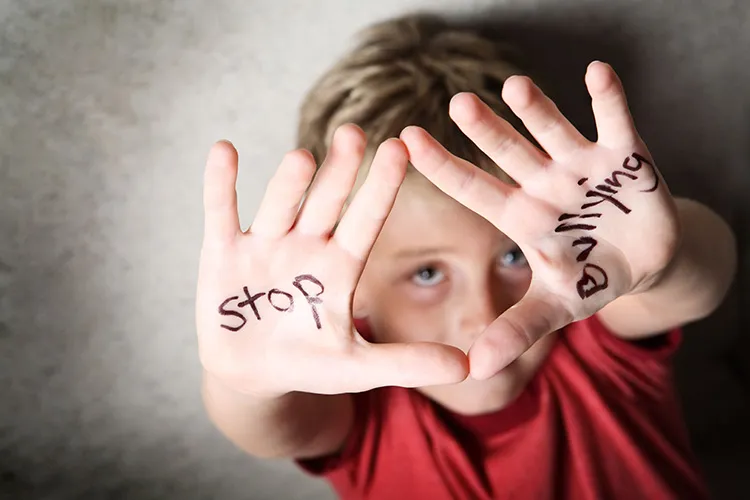
How do I detect if my child is suffering bullying? And how do I prevent it?

Mireia Navarro Vera
Director and psychologist
COPC 10631
Contents
- How do I know if my child is being a victim of bullying?
- A change in their usual behavior
- They don't sleep well
- They have nightmares
- They somatize
- Sunday syndrome
- They push their friends aside
- They refuse to go to school
- Their academic performance drops
- Loss or breakage of school supplies
- Keys to preventing bullying:
Bullying is a topic that worries parents and teachers a great deal. It is one of the causes of suicide in adolescence and when we hear news of this kind in the media we are left stunned. We find it hard to understand that our young people die because of this.
Although it may seem that bullying only happens in adolescence, the truth is that the grades where it is most frequent are fifth and sixth of primary school and the trend is for it to occur earlier and earlier.
How do I know if my child is being a victim of bullying?
Warning signs:
A change in their usual behavior
As parents we know our children well and we are able to detect when a general change occurs in their behavior. A change in their mood, seeing them more restless than normal, more withdrawn, or not doing the things they usually did may be a sign that something is wrong. Although it is not necessarily a sign of bullying, it usually is one of the first ones to appear.
They don't sleep well
They find it hard to fall asleep and drag out their bedtime, they wake up several times during the night or they get up earlier than normal. When something worries us, we tend to sleep badly.
They have nightmares
We should get used to asking our children about the content of their dreams. They will give us very valuable information about the things that worry them.
They somatize
They start to have headaches, stomachaches or dizziness. They are frequent complaints and do not respond to any illness or clear cause.
Sunday syndrome
On Sunday they already start to get nervous because they are already thinking that tomorrow they have to go to school. As with all the signs, it does not mean that every child who gets nervous on Sunday is suffering bullying, but all those who suffer it tend to get very nervous on Sunday.
They push their friends aside
A change in the relationship with their friends from school is very characteristic. If they push them aside or no longer want to go out as much with them or do not invite them home when they used to, or stop talking about them or with them. This is an important warning sign.
They refuse to go to school
They had always gone to school happily and suddenly they begin to refuse to go to school or to make excuses, to pretend they are sick or even, in adolescents, to skip class. This change should make us suspect that something is happening at school. It may be bullying or not, but there is some problem. In younger children what we may notice is that they stop talking about what has happened in class or that they do not say the name of the child who is bullying them.
Their academic performance drops
A drop in academic performance can also be a warning sign of several things; it is a good thermometer for seeing when something is happening to a child. They will begin to have problems with attention and concentration in class that will end up affecting their performance.
Loss or breakage of school supplies
It is probably the most characteristic. They frequently lose school supplies and do not give a clear explanation, or they bring them back broken. It may also be that they come back with torn clothes and do not know how they did it. Closely linked to this would be asking for more and more money to take to school, especially with adolescents.
If we detect similar signs in our children, we should talk to them but without blaming them or losing our temper. We will avoid phrases such as:
“Why didn't you tell me before!”
>
“How could you let them do this to you?”
This, in the best of cases, which is that your child tells you. But often what tends to happen is that out of fear of the bully they do not say it or because they are too young to really understand what is happening to them.
The next step is to talk to the school. They are the ones who will be able to detect and prevent the bullying. Communication with our children's teachers is essential. Often when a child who has suffered bullying is moved to another school, they become a victim of bullying again. Perhaps it is because they are more vulnerable, because they are first overcoming the bullying and then the change of school, of friends and of environment. Therefore, the best option is to solve it within the school itself, whenever possible.
Keys to preventing bullying:
-

Educate in solidarity, in tolerance and companionship
- Talk about human rights
- Be intolerant of violence
- Do not encourage silences or secrets
- Teach that they too can say NO and we will listen to them. They must defend what they think and what seems fair to them.
- Show them that they also have the right to choose and to give their opinion by letting them make small decisions at home, that they participate and feel listened to. Their opinion has to be important to us
- Always listen to them, whatever the moment may be. They have to understand through actions that we will always be willing to listen to them, at any time and in any situation
- Avoid lectures when they tell us that someone has hit or insulted them. Because we will make them feel useless and guilty. That way we do not help them, we do not convey to them that they can count on us, and the next time it happens to them, they will think twice before telling you.
- Practice active listening. When they tell us something, especially something related to violence, first ask: What happened, where were you, who was there, how did you feel,…You have to listen carefully to what they want to tell us and afterwards, if we believe they have not acted correctly, we have two options: explain to them what we did when something similar happened to us at their age, or look together for other better options for acting in that situation, far from the parental lecture.
The psychological aftereffects of bullying can be anxiety, sadness and psychosomatic symptoms, but in more serious cases it can end in depression or post-traumatic stress disorder. Something that is a cause of suicide among our young people should not be taken lightly. We as parents must promote talks and workshops in schools that help to prevent these problems.
Does this resonate with you?
Our team can help. Write to us and we'll guide you with no obligation.