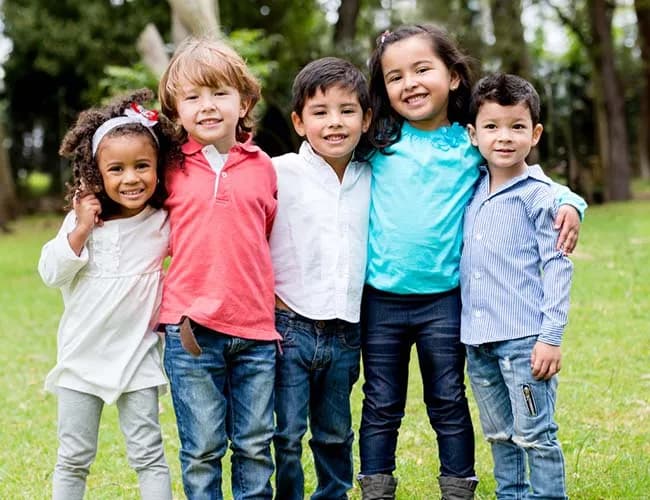
How can we help make and keep friends?

Mireia Navarro Vera
Director and psychologist
COPC 10631
Contents
Everyone wants to have friends, but not all of us manage to.
Social skills are a set of abilities and strategies that allow us to function correctly in our social relationships.
These skills are made up of the ideas, feelings, and beliefs that come to us both from learning and from our lived experience over the years.
It is important to emphasize that these skills are learned and therefore can be acquired.
Some of the characteristics of social skills are:
- They are not innate, that is, they are acquired through learning.
- They are related to people's self-esteem.
- They include both verbal and non-verbal behavior.
- They are necessary for the proper development of people, since coexistence involves relating to others.
What are the essential social skills?
- Empathy, that is, the ability to know how to put yourself in someone else's place.
- Conflict resolution and knowing how to find alternatives to solve it.
- Communication, that is, knowing how to express ideas and feelings and at the same time knowing how to listen to others assertively.
- Self-control, this means knowing how to control impulses and how we manage emotions.
- Respect and sincerity.
Children who sometimes find it hard to meet and make friends sometimes have to learn skills to improve their relationships with peers, such as:
- Taking an interest in the other person and knowing how to ask others about their things.
- Knowing how to focus on the conversation being held, that is, that the answer relates to the question asked and not changing the subject.
- Showing interest in the conversation or in what the other people are doing, that is, non-verbal communication: making eye contact, smiling, and making gestures that are coherent with others.
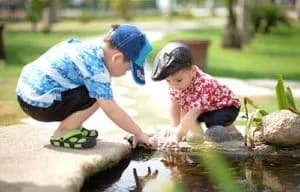
To help children who find it hard to meet and relate to their peers, it is not only important that they are with other classmates, but they also have to know how to behave and act to make and later keep friends.
- To make friends, the first thing will be to approach the other children and greet them with a smile
- Take an interest in the other person, for example, by asking them things.
- Listen carefully and looking at their face.
- Explain things about ourselves: likes, interests, hobbies..
- Participate in activities, groups, sports… there are many groups where we can meet people of the same age
It is key to know how to:
- Listen
- Start a conversation
- Know how to ask questions
- Know how to introduce yourself
- Say thank you
How can this skill be acquired?
- Children learn to relate by imitating the people who are close to them and important to them, which is why parents, teachers, and any adult must be good behavioral models.
- At the same time, from a very young age we relate to people, and from these interactions and from our own experience they help us learn social behaviors.
- Social reinforcement, both positive and negative, is key. If we have positive reinforcement about a behavior, it will generally be repeated over time.
If we find it hard to have friends, certain personal problems can arise:
Both children and adults can generate and acquire:
- Low self-esteem
- A decline in academic performance
- Psychological distress such as sadness, anger, depression, among others…
Having friends with whom to share our life, our hobbies and our hopes is very important to feel happy. Making and keeping friends takes effort but it is worth it!
Does this resonate with you?
Our team can help. Write to us and we'll guide you with no obligation.