What positive aspects do we take from lockdown?

Eugenia Olego Gual
Child, adolescent, and adult psychologist
COPC 16511
Contents
We are living through one of the most difficult moments worldwide, leading to the lockdown of most people so that it does not spread further.
But we must find the good side to all of this, even in a pandemic like this one. So we decided to ask many people what positive things they were taking from lockdown, and the conclusions were the following:
The positive aspects of lockdown
We eat healthier
Staying at home means eating healthier, since we do not have such easy access to foods that are not necessary, such as those related to "snacking".
In addition, the fact of not shopping regularly leads you to adapt with what you have and thus be able to create new dishes. Linking this last point with the fact of having more time, it makes us cook more, allows us to introduce our little ones to the kitchen, lose the fear of making more elaborate dishes, enjoy the process and, above all, value how important it is to eat in a healthy way..
The importance of physical exercise
While you do physical exercise your body begins to secrete hormones that are really beneficial for your body and mind. Let's look at some of them:
- Endorphin. Also known as "the happiness hormone". It is responsible for stimulating the brain areas that produce pleasure in the body and decrease the sensation of emotional pain.
- Adrenaline. This is the one responsible for giving us "a rush" of energy. Producing controlled doses of Adrenaline makes us feel alive and with a youthful spirit.
- Growth hormone. It helps increase the volume of muscles, bone and collagen.
- Antidiuretic hormone: When you do physical activity, this hormone is secreted, which is responsible for absorbing the fluids from the bladder. That is why, when you do sport, you have the feeling of going to the bathroom continuously.
Although this quarantine period seems to have limited access to sport (due to the closure of gyms or outdoor activity), it has not reduced the practice, but quite the opposite. According to statistics, many people who did not do sport have started to take it up in different ways, such as walking on the terrace, running around the house, dancing zumba, practicing yoga or even cycling on that stationary bike we had stored in the storage room. In addition, those who were already regulars have adapted to new ways of doing it (such as the swimmer Yuliya Efimova, who "swims" in the kitchen of her house).
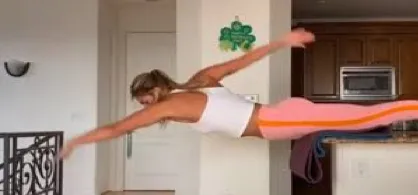
Studies confirm that for an activity to become a habit, we only need to do it 21 days in a row. Knowing in advance the benefits it offers us and seeing it with our own eyes, it would be a good opportunity to keep it in our daily life, and not only during this period.
Time for our hobbies
How many times have we said the phrase: "If I had more time, I would dedicate myself to…". Now it is becoming a good opportunity to be able to practice those things we like, such as starting a language, playing an instrument, cooking, watching series, doing our nails, listening to music, doing crafts alone or with the little ones, etcetera.
But what has drawn the most attention is that many have valued picking up a book again and even argue that "they have fallen in love with reading again".
Less pollution
The European Space Agency (ESA) releases satellite images where a 50% reduction in the levels of Nitrogen Dioxide (NO₂) is observed, a harmful substance emitted by gas vehicles and industrial plants, which has significant effects on human health, harming above all patients with respiratory and cardiac conditions, as well as worsening the symptoms of allergy sufferers.
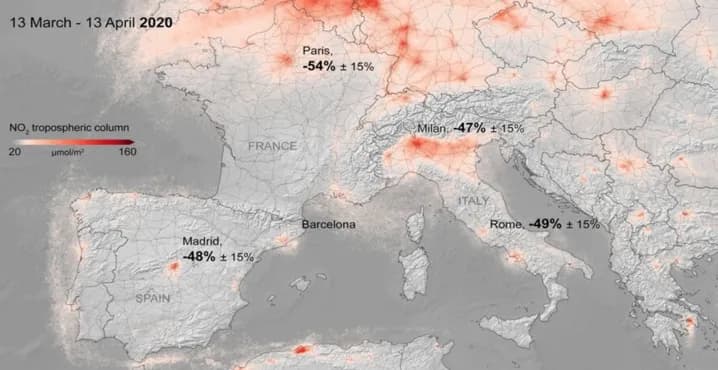
Halting transport and a large part of industry causes the air to improve by up to 60%, in other words, the air is cleaner. This could make us reflect that perhaps we should take better care of our planet simply by changing habits that facilitate the reduction of NO₂, such as using public transport more or other non-polluting means of transport.
More communication
I imagine that some of you must relate to expressions such as: "Since lockdown I talk more with my mother/father/grandparents" or "I am talking with people I had not been in contact with for a long time" or perhaps "I talk with the upstairs neighbour, which we had never done before" or even "on Sundays we have a vermouth with the neighbours on the balconies".
The Professor of Journalism and Communication at the UAB, Jose M.Pérez Tornero, states that "lockdown makes us aware of the need for physical contact", thus encouraging more communication with our loved ones. As the saying goes: "We do not value things until we lose them", since in some way we find ourselves limited in our ability to relate to others and we turn to other channels of communication, such as video calls, to maintain and even, in many cases, strengthen those bonds.
The recovery of old friendships is because, when leaving the routine of contact and as the distance with our closest friends grows, it makes us have a vision of distancing from all human beings. That is to say, people you had no contact with for many years become equal to those you see regularly.
Another no less important aspect is family coexistence, which is generating bonds of communication that could hardly be created in day-to-day life. We find a great number of examples, such as talking more calmly with our children, having more communication with our partner, doing activities as a family, eating together at the table, and even playing more with them (let's not forget that play is pure communication).
We are adaptive beings
As Darwin said, we human beings are beings who adapt to our environment. We can observe this in different aspects, such as creating a small world of routines within our own home. Obviously these will be more flexible than the ones we follow in a regular life, since being shut in is no easy task and sometimes it is necessary to break them.
It is a good moment for us to value the effort we are making in adapting to the situation, as well as understanding those around us.
A gift: having time
"I saw so many hares running aimlessly that I learned to be a tortoise and appreciate the journey"
We have a way of life where we are used to obtaining things quickly and immediately, making us not savour what is happening to us along the way. This hurried life leads to stress, a physical state that harms us both physically and mentally. This has caused a movement called the "slow movement" to appear, which originated in the 1980s as a protest against the establishment of a fast food restaurant in an Italian city. This movement, which began with that complaint, was transformed into a philosophy of life that proposes taking life more relaxed, thus creating more quality moments and living in the present.
COVID has pushed most of the population to remain confined, and also to have more time. Many people verbalize that during these weeks they "have slowed down the pace of their lives", learning to practice patience and to enjoy their tranquility. Others observe that their children enjoy not having so many set schedules, also feeling helped with homework without pressure, or simply being able to sleep more.
See more information about the Slow Movement.
We are beings of solidarity
During these days we have seen many demonstrations of solidarity among us, since deep down we human beings possess a quality that emerges in the most difficult moments, especially when our own species is under attack.
It is moving how many people get involved to help. Let's look at some examples:

Global applause every day at 8.00 p.m., knitting masks for free, doing the shopping for the most vulnerable, solidarity platforms to provide company (#ZGZAyuda), free cultural plans, projections of positive phrases, support for the people who have lost their loved ones, taxi drivers who take healthcare workers for free, and so an endless number of examples that demonstrate how we human beings have the innate capacity to empathize with others.
#### A moment for reflection
Time implies reflection, whether to want to make small changes in our routines, such as exercising more, saving for these unforeseen events, or rather "living more with less". It is even a good moment to think about what we want, enjoy small things, have more time to define our goals, work on our personal development and even see solitude as a positive state.
But this also generates deeper reflections, such as the fact of realizing how insignificant we are and that it is probably a moment to meditate on the idea that what is happening is a sign for us to become aware that we need to make some changes in our lives so that the world works better.
Does this resonate with you?
Our team can help. Write to us and we'll guide you with no obligation.