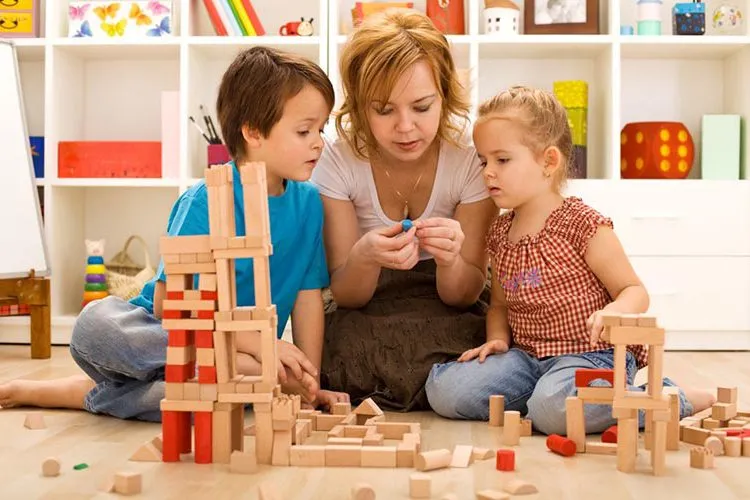
Playing with the psychologist

Magda Sarlé Gallart
Child, adolescent, and adult psychologist
COPC 13901
The main purpose of play is fun or entertainment.
Play stimulates sensory and motor development in children; play introduces the social group and lies at the origin of community awareness; and play also trains physical and mental skills and confronts you with the need to find solutions to problems.
Play is perhaps the most complete form of education.
Play is considered the natural way for children to learn and communicate.
The capacity and quality of play in children can be a good indicator of their emotional level, so it is a useful clinical sign used in the assessment and treatment of emotional problems.
Knowing and being able to interpret the meaning of play in children allows them to express what is difficult for them to communicate verbally.
In the same way that an adult can verbalize their difficulties through words, children freely express and communicate themselves through play.
In Play Therapy, toys are the child's words and play is their language (Landreth, 2002). The goal is to help them express, work through and resolve their emotional conflicts, and it is a technique recommended for children aged 4 to 11.
For this reason, in both the assessment and therapy process, toys that allow the symbolic expression of the child's emotions and needs are recommended.
In the psychotherapeutic process, play can serve multiple functions:
- The function of establishing a positive relationship between the therapist and the child
- Diagnostic function: detecting the child's blocks and difficulties
- Therapeutic function:
- to open up emotionally, through non-invasive channels
- to project both conscious and unconscious aspects (symbolic and bodily language)
- to release tensions and unblock
- to restore a state of greater balance
- to acquire new adaptive attitudes that help them move forward
Play therapy gives each child the possibility to explore and develop their initiatives, to understand what they do and what they want to achieve. The therapist builds on the child's ideas and helps them see new possibilities in their play.
The construction of games, representations and dramatizations serves the purpose of eliciting problem behaviors, so that we can assess their defenses, their level of tolerance to frustration, anxiety, aggressiveness, dependence or independence, their strengths and difficulties, and their behavior in general.
Types of play:
Creative sensory play with materials such as clay or finger paint allows the child to explore and get to know the world through their sensations, achieving a more functional contact with their environment.
The use of drawing and other artistic media such as painting, as well as the use of narratives, help the child express their experience, lay the story out beyond themselves, and build new meanings where they can recognize the resources they possess and be able to change them to adapt to new ones.
In a toy house, children illustrate almost entirely some of their associations with the roles, relationships and possible problems of their own home.
Play with animals can reflect a hierarchy of instincts and unconscious areas, ranging from large, wild animals to domestic and frequently obedient ones.
Through puppets or marionettes, children can find a means to express stories and things that they would hardly express openly.
In storytelling, the child organizes situations and dialogues, creating scenes and characters that express conflicts and emotions. The child can express themselves through the characters and take enough distance from the conflictual topic, feeling safer and more protected from their feelings.
In dramatic expression play, the child is invited to play, from mime to improvised acting, having the opportunity to play with different roles and re-enact the specific situation.
Does this resonate with you?
Our team can help. Write to us and we'll guide you with no obligation.