Let's Make the Most of ADHD

Eugenia Olego Gual
Child, adolescent, and adult psychologist
COPC 16511
Contents
The other side of the coin: the benefits of having ADHD
The term hyperactive resonates with all of us, especially when we refer to children who have a motor activity above what is considered normal. We associate hyperactive with a restless, spoiled child with behavioral problems. But those of us who work in clinical child psychopathology define the term hyperactivity as a symptomatic picture of neurological origin, characterized by three key symptoms: attention, impulsivity, and hyperactivity, which can degenerate into significant problems, and not as a spoiled child who behaves at will.
The negative connotations given to a child with this disorder are constant, and this causes the abilities they may have to be hidden. Moreover, the fact of not nurturing the positive causes the negative symptoms to increase, giving rise to behavioral problems, learning difficulties, stress, and lack of self-esteem. Is this what we want for our children? Why not nurture their skills? In this article we will focus on how we can stimulate the positive side of ADHD.
According to the DSM-V (the manual for the diagnosis of psychological disorders), ADHD affects 3-7% of children and adolescents, so we observe that there is a high percentage of children with this condition. This requires health professionals to make a correct diagnosis, as well as early detection and early intervention. But aside from all this, the factors that can influence the positive evolution of childhood hyperactivity would be:
- A well-structured and organized family
- The presence of flexible but clear rules within the family dynamic
- That parents do not fall into overprotection, adapting to the child's possibilities
- Social reinforcement and the absence of physical (and psychological) punishment so that behavior can be controlled
- That children are not aggressive, oppositional, or have conduct disorders. This would aggravate the disorder.
- Training and knowledge for teachers
- The parents' confidence in the child's intellectual capacity. This helps the child gain personal security.
An appropriate approach to the positive aspects of the child with hyperactivity makes it easier for them to reinforce their skills so that they can be happier in their day-to-day life and in their future. Here we provide some of them:
1. Their creativity:
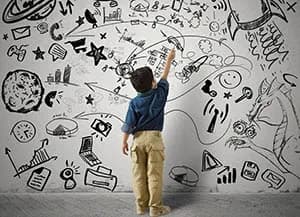
Their curiosity, spontaneity, and impulsivity make these children have a free spirit and love to explore the outside world, making their creativity soar. With the right tools, we can help the child use this quality appropriately.
Why not become explorers alongside our children? Join them on this adventure and you will be surprised by the discoveries you may come to see of themselves and of their surroundings.
2. Good humor:
People with ADHD always know how to make others laugh. They are able to create a positive "good vibes" atmosphere, infecting others so they have a good time.
3. Passionate about life:
We are aware of their deficits, such as their attention or organization. But when we suggest doing something they enjoy, they are the first to enjoy 100% of what they are doing. In addition, they are children with hyperfocus, that is, the ability to abstract themselves and concentrate on carrying out an activity when it is attractive and novel to them. Their passion for doing things and their hyperfocus make them give the best of themselves; they strive to do it well, and they value this both in others and in themselves. That is why it is essential to offer them activities that they truly enjoy. Be completely sure that they will thank you for it.
4. A view of life different from that of others:
There is something very characteristic in children with ADHD. It has been proven that a large number of famous people related to art, singers, etc.… have suffered from this disorder. These people do not limit themselves to seeing the world in a realistic way; rather, being individuals with a great capacity for imagination and creativity, they have let these abilities fly free to create great works of art and to be able to express them before others.
5. Generous with the world:
We live in a highly selfish society that makes us become quite individualistic without thinking about our neighbor. These children tend to be very generous in every sense. Therefore, the good management of generosity makes these individuals teach others the importance of being more understanding and supportive.
6. Risk-takers:
More and more we find children in the practice who present many fears. On the contrary, we observe that most people with ADHD like to take risks and try new things. Obviously, poor management is not good, but if we help them control this quality, they can explore the novelties that life offers them. In addition, they would help more fearful children by accompanying them to overcome their insecurities.
These are the most notable characteristics of these children. Once you have read them, put yourself in their shoes and reflect. If we stop to think, they are qualities that most of us would like to possess and that many times we do not dare to carry out. If we nurture these abilities in these children, we can help them use their disorder in a productive, appropriate, and creative way. And if we do, we will make these prized abilities spread to other people, turning society into a less automated and more constructive one.
For more information you can click here.
Does this resonate with you?
Our team can help. Write to us and we'll guide you with no obligation.