Games a psychologist would recommend to parents

Eugenia Olego Gual
Child, adolescent, and adult psychologist
COPC 16511
How much time do you spend playing with your child every day?
>
Let's rephrase the question:
>
How much time do you spend playing with your child every week?
We know that nowadays there is barely any time to play with our children: work schedules, extracurricular activities, household chores, homework, etc. And at the end of the day, you realize that you haven't shared a single playful moment with your loved ones. And does this really make us feel good? Finding a moment each day to play with them is as important for children's development as good nutrition. Experts confirm that, if parents played with their children regularly during the early years of childhood, problems would decrease considerably during adolescence. An article published by the American Academy of Pediatrics (AAP) points out that play allows children to express their creativity and develop their imagination, their manual dexterity and their physical, cognitive and emotional skills, fundamental aspects for a healthy development of the brain. In addition to these aspects, it is also emphasized that children learn to work in groups, to share, negotiate, resolve conflicts and defend their points of view.
Recent studies advise parents to dedicate at least half an hour a day to playing with their children. Although it may seem like little time, it is enough if the activities are carried out under the right conditions and the adults have thought them out in advance.
We always tell parents that children need 3 things: Play, limits and love; that's all.
Below, we will propose some games that it would be advisable for parents to play with their children.
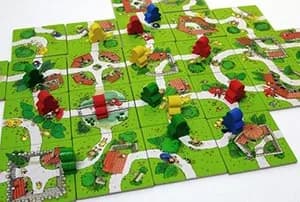
1. Board games:
Children learn vocabulary with Scrabble, geography with the Tourist game, creativity with Pictionary, strategy with cards, memory and concentration with Memory, patience with the Jigsaw Puzzle, knowledge with Trivial Pursuit, with Risk they become interested in history, or vocabulary with Taboo. But they all share the same objectives:
- Learning that there are rules in the game and that they have to be respected
- Increasing their tolerance to frustration. Parents should occasionally let them lose.
- Relating better with others
- You can also create your own personalized board game. In psychology consultations, board games are created where the child and the psychologist invent the game in order to make it more authentic and develop their creativity further, as well as strengthening the therapeutic bond. For example, "the Goose Game of questions": on each square of the traditional Goose Game we can place questions such as: 3 things that make you happy, your two best friends, where you would like to fly if you had wings, etc. In this way, the players get to know each other better, creating a more special connection between them.
2. Role play:
Children imitate the role of adults, as a role-playing game, to reflect the activities that adults carry out daily. Children can play the role of "parents", "doctors" and "teachers", "cooks", etc.
- Children develop imagination by creating the roles of other people. Here parents can observe the vision their children have of the world. And if they see something that is not appropriate, they can give them strategies to improve it. Or also, we can detect whether they have a problem or whether something distresses them, or whether they simply have a mistaken perception of the situation. For example, problems with children at school: through role-playing it could be observed.
3. Construction games:
Construction games are one of children's favorites. The act of building something out of separate pieces is very motivating for them. In addition, it encourages imagination and creativity in children (this translates into the brain working by making new connections between neurons).
There are countless benefits to these games:
- They help boost their visual-spatial orientation and their balance
- Development of motor skills
- They help children to be more organized
- They develop intuition and mental agility since they have to process data and quickly solve the problems that may arise during the construction game
A construction that children love is building a cave or a tent together. It is a way of strengthening bonds between parents and children, creating a special space for them.
4. Physical exercise:
Exercise may not be seen as a "game", but it is. Riding a bicycle with your child, playing soccer in the park or racing in the water is a GAME in every sense of the word.
Let's note that there are more and more places where you can do sports as a family. It is about sharing sporting habits as a family, strengthening the bond between parents and children, who may even end up sharing a genuine hobby.
There is an endless amount of fun activities that can be done: skating together (fun guaranteed), dancing (zumba, rumba, sevillanas, etc), ball games, hiking, mountaineering, climbing, etc.
As we can see, there is an endless amount of games that can clearly replace video games and television. It is clear that these are also part of their lives, but if we can reduce the time spent on them and implement more time with those mentioned above, we will help children to be more autonomous, social, creative and, above all, happier.
One last piece of advice: before you start playing with them, become a child yourself; it helps you enjoy the game more.
Does this resonate with you?
Our team can help. Write to us and we'll guide you with no obligation.